


After my baby was born, I looked for a simple plan. I wanted a 20-minute daily workout that was easy and didn’t need a gym or lots of time. This became my go-to routine for losing weight after having a baby.
If you’re ready to exercise, this routine is perfect. It’s a quick home workout made for moms. It builds strength and energy but is still easy and gentle for postpartum.
I don’t push the idea of bouncing back fast. Losing weight after a baby involves many things: sleep, stress, breastfeeding, hormones, and healing. Each can affect you differently each week. I aimed for safe, slow weight loss that wouldn’t leave me tired or sore.

In what follows, I’ll detail my 20-minute postpartum workout: warm-up, strength, cardio, and cool-down. You’ll also learn about changes you can make and tips on eating and habits. These helped me stay fit even when I was too tired.
Why I Needed a Simple Postpartum Weight Loss Plan
After my baby was born, perfect routines became impossible. I looked for a weight loss plan that fit real life – with all its chaos. Things like spit-up, endless laundry, and a calendar that was all over the place.
I chose simple fitness steps. Anything too complicated or time-consuming didn’t work for me.
My biggest challenges with time, sleep, and consistency
I had little time to myself, and my nights were tough. Feedings and a fussy baby made long workouts impossible.
I tried creating a workout schedule. It didn’t survive the first early wake-up. Planning for short interruptions helped me stay consistent.
I found quick workouts I could easily pause and restart. This way, I didn’t feel like I was failing.
How postpartum recovery shaped what I could realistically do
Recovery was about more than soreness; it was about regaining control. My core felt weak. I was careful to support my pelvic floor.
My plan was gentle on purpose. I focused on exercises that built strength slowly.
Choosing safe and steady moves helped me avoid setbacks. This kept me on track with my goals.
What “healthy weight loss after baby” looked like for me
For me, it meant being active most days. Forgetting the scale, I focused on increased energy and how my clothes fit.
I noted improvements in my stamina and mood. These made the workouts worthwhile, even on little sleep.
Here were my rules: short workouts, minimal setup, adjust based on my feelings, be flexible. That helped me keep going.
Before I Started: Safety, Recovery, and Doctor Clearance
I was eager for results but healing was my priority. Rest, sleep, and recovery were key parts of my plan. I knew I could wait to get back in shape, but healing couldn’t wait.
Getting my doctor’s okay to exercise after birth was crucial. Once cleared, I began with walking, gentle stretches, and simple breathing exercises. This approach helped me regain stability without rushing into intense workouts.
When I knew it was time to begin moving again
I looked for signs that I was ready to start exercising. My bleeding had reduced, I could manage pain better, and moving around wasn’t too hard. If I felt any sharp pain, I stopped and scaled back my activities.
Late in the day and the following morning, I checked how I felt. Feeling sore or extra tired was a signal to ease up. This way, I always kept my safety in mind.
Diastasis recti and pelvic floor symptoms I watched for
If I saw bulging in my stomach during movements, I knew to avoid intense abdominal exercises. I picked exercises that were safe for diastasis recti. I was patient with my core’s healing.
I paid close attention to signs from my pelvic floor too. Experiencing heaviness, pressure, or pain meant I needed to lower the intensity. On those days, I focused more on breath work and gentle strengthening.
How I modified everything for C-section recovery
After my C-section, I was extra careful with my incision area. My modifications included avoiding certain exercises, careful not to twist too much, and gradually working on core strength. I used controlled breathing and proper posture for support.
Whenever I felt unsure, I sought advice from professionals. I consulted my OB-GYN, pelvic floor therapists, or trainers specialized in postpartum fitness. My main goal was to move safely today so I could do more tomorrow.
The 20-Minute Daily Routine That Helps Moms Lose Weight
This is the 20-minute daily routine that helps moms lose weight even on rough nights. I saw it as daily movement, not a perfect plan. Some days were gentle for recovery, other days I pushed harder.
I set a rule for myself: even 10 minutes was enough. This thinking helped me stay on track, which was more important than being perfect.
My 20-minute structure: warm-up, strength, cardio, cool-down
The first 4 minutes, I focused on warming up. I did rib breathing, shoulder rolls, cat-cow, and hip circles to loosen up. It made me feel less stiff and more ready to move faster.
Minutes 5 to 16 were for strength with basic full-body exercises. This part of my workout made the biggest difference, supporting lean muscle and metabolism. I chose safe core exercises like heel slides, dead bug arms-only, and glute bridges.
The last 3 minutes, I finished with strength and low-impact cardio. I marched in place, did step-ups, or walked briskly. Then, I took a couple of minutes for a forward fold, chest opener, and calm breathing.
What I did if my baby needed me mid-workout
I made sure my workout could be paused because I knew interruptions happen. If my baby cried, I’d pause the timer and stretch or walk while soothing them. Sometimes I bounced or did gentle movements until they calmed down.
After soothing my baby, I’d continue from where I stopped, without starting over. This approach kept me from giving up when things got chaotic. It made my routine realistic and manageable.
My easiest equipment-free options for home workouts
Most days, I chose bodyweight exercises for a quick, equipment-free workout. Chairs or couches were great for sit-to-stands, incline push-ups, and supported split squats. And stairs were perfect for light cardio without needing extra room.
If I needed a bit more challenge, I’d use a diaper bag as a light weight, but always making sure it felt okay. I focused on smooth movements and good form, stopping before stress on my pelvic floor. This made my workout achievable and energizing.
My Warm-Up That Wakes Up My Core and Joints
I always do my postpartum warm-up, no matter how my night went. It helps me feel less stiff from all the baby care. Plus, it gets me ready for some me-time without feeling rushed.
To start breathing for my core, I place hands on my ribs and breathe in slow. I exhale longer through my lips and let my ribs relax. I focus on gently supporting my belly without any crunching.
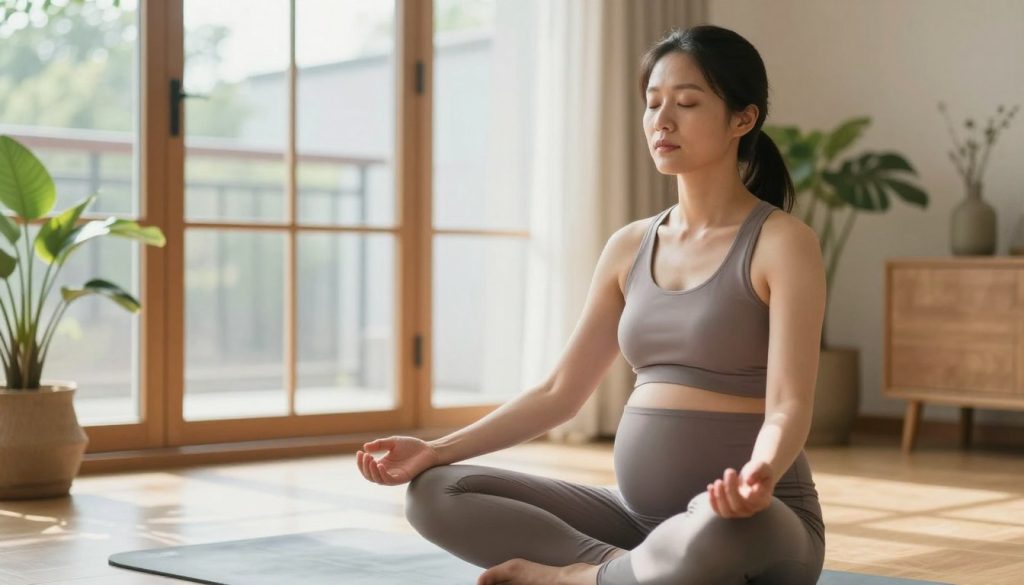
Then, I do easy exercises for my upper back and shoulders. This includes neck rolls, shoulder circles, and movements to open my chest. It’s a great way for new moms to improve their posture, especially after nursing.
Next, I work on making my hips more flexible with gentle movements. I add stretches for my feet to prepare for squats and lunges. Finishing with some bodyweight exercises makes my hips ready and keeps my back straight.
I keep the intensity light to moderate, aiming for a gradual increase in effort. I want to feel warm, more stable, and better connected to my breathing. If I feel any discomfort in my pelvic area, I ease up on the exercise.
My Strength Moves to Build Lean Muscle and Boost Metabolism
I include a simple postpartum strength workout in my routine. It focuses on slow, controlled reps and clean form. This approach helped me gain lean muscle postpartum without worsening any aches.
I keep my workout format consistent. I choose 4–6 exercises, do each for 40 seconds, and rest for 20 seconds or perform 8–12 slow reps. I complete 2 rounds of the circuit, rest as needed, and ensure smooth breathing. This creates a metabolism-boosting workout for moms that is also manageable.
Lower-body staples I could do in a small space
In my home strength workout, I focus on lower-body exercises that don’t need much space. I frequently do chair squats. The seat serves as a target and helps align my knees and hips.
Glute bridges on the floor and stair step-ups are also part of my routine, using the railing for support when needed. For lunges, I take a shorter stance and keep the motion shallow. This way, I focus on my glutes and hamstrings, improving pelvic support.
Upper-body moves that helped posture and “mom shoulders”
Caring for kids can cause my shoulders to lean forward. So, I include daily posture exercises. Incline push-ups against a counter and rows with either a resistance band or a towel are my choices, performed slowly.
The cues I follow are straightforward: keep my ribs down, my neck long, and shoulders back. For overhead presses, I only proceed if they’re stable and don’t cause discomfort, keeping them light and controlled.
Core-safe exercises that supported my postpartum belly
I stick to core-safe exercises for my midsection, ones I can do with proper breathing. Dead bug variations, heel slides, bird-dog, and side planks from my knees work well for me.
I prioritize “stability over intensity” using techniques that avoid twisting or overextending. I avoid full sit-ups, long planks, and any jumpy movements that might worsen symptoms. Instead, I opt for calmer exercises that allow for proper form.
My Low-Impact Cardio Finish for Fat Loss Without Burnout
I wrap up my routine with low-impact cardio after having a baby. This is because it’s kinder to my joints and pelvic floor. I find it’s the perfect fat loss cardio for moms, allowing for daily repetition.
I limit it to 3–4 minutes most days, seeing it as a gentler form of HIIT. I choose a single activity: step-ups, marching, stair laps, or shadow boxing. On tougher days, I skip jumps but still view it as a success.
For the easiest option, I turn to walking cardio at home. I walk briskly from one room to another or enjoy a stroller stroll if the weather’s nice. Even a short dancing session is beneficial, provided my feet don’t leave the ground.
I follow simple cues to maintain intensity. Short phrases for talking, nasal breathing when possible, and immediate stopping at any discomfort. This approach keeps low-impact cardio safe and practical for me postpartum.
My aim is not to overdo it but to stay energized. It’s all about fitting fitness into real-life situations, especially after sleepless nights. By keeping it straightforward, walking cardio or a gentler workout is always available for me the next day.
My Food and Lifestyle Habits That Made the Routine Work Better
Once I balanced my meals and daily activities, my workouts improved. Dealing with postpartum hunger and cravings was tough. To manage it, I focused on nutritious foods that made me feel satisfied and calm.
My high-protein, mom-friendly meals and snack shortcuts
Breakfast was about keeping it simple and focusing on protein like Greek yogurt and eggs. On hectic mornings, I chose high-protein options that were quick and easy.
Lunch involved minimal preparation. I combined things like rotisserie chicken and salad kits for quick meals. My guideline was to include protein, produce, a fiber carb, and healthy fats to avoid getting hungry soon after.
Snacks were things I could grab and eat with one hand. Favorites included string cheese, beef jerky, and Greek yogurt. These helped me stay on track without fuss.
My hydration and fiber habits to curb cravings
I made drinking water a habit by keeping a bottle near me, especially when feeding my baby. If I felt the need, I’d add hydration supplements to keep feeling good.
To help with cravings, I focused on foods high in fiber like berries and oatmeal. Increasing fiber gradually and drinking lots of water helped avoid stomach issues.
How I handled sleep deprivation and stress eating
Lack of sleep made me feel hungrier, so I planned my meals and snacks carefully. Having a routine and simple groceries made this easier.
When I felt the urge to eat because of stress, I’d first try something to calm down like a walk or deep breaths. I avoided strict dieting, especially on tough nights.
How I tracked progress beyond the scale
I didn’t just use the scale to track my progress. Measuring my waist, taking photos, and noticing my clothes fit better were key indicators.
I also paid attention to other health signs like my resting heart rate. Even during difficult weeks, I focused on what I was consistently doing right, such as keeping active.
Conclusion
This 20-minute daily routine for moms wanting to lose weight worked for me. It was realistic. It included a quick warm-up, strength exercises, low-impact cardio, and a cool-down. If I needed to pause for my baby, I could pick up where I left off.
Safety was always my top priority, not just an extra. I watched for signs that my body was telling me to ease up, especially with my core and pelvic area. This approach made sticking to my postpartum weight loss plan easier, without stressing over each workout.
The key to keeping it going was focusing on being regular rather than intense and looking beyond just weight loss. I paid attention to my energy levels, mood, what I craved, and how my clothes fit. This was how I managed post-baby fitness realistically, even when tired.
If you’re just starting out, try to stick with it for a week by just showing up. Use the workout plan as a starting point but make changes to match your recovery and lifestyle. Aim for a healthier, manageable postpartum life, not perfection.