


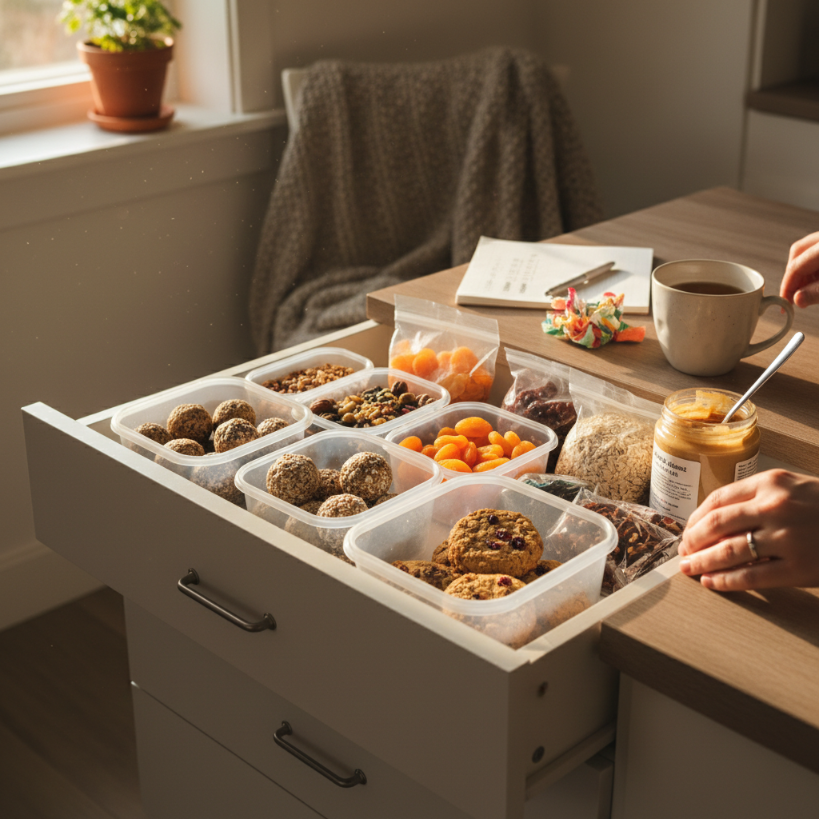
I remember sitting on my nursery floor at 3:00 AM, rocking a baby who finally—*finally*—fell asleep, and hearing my stomach growl so loud I thought it might wake him back up. I was starving. Not just “I could eat” hungry, but a deep, primal, “I need a sandwich and three granola bars right now” kind of hunger. I crept to the kitchen, tripping over a squeaky toy, and realized I had nothing ready to grab with one hand. That was the night I built my first lactation snack drawer.
Nursing or pumping burns an extra 500 calories a day. That’s like running a few miles while someone literally sucks the hydration out of you. If you don’t have a plan, you’ll end up eating stale crackers or, worse, nothing at all, which is the fast track to a postpartum meltdown. This guide is all about building a stash that supports your milk supply, keeps your energy from crashing, and—most importantly—is reachable while you’re trapped under a sleeping infant.
Why This Matters
Your body is a factory right now. Even when you’re sleeping, you’re producing life-sustaining liquid gold. This requires a steady stream of complex carbohydrates, healthy fats, and galactagogues (foods that may boost milk supply). If your blood sugar dips because you haven’t eaten since lunch, your mood will follow it off a cliff.
A dedicated snack drawer isn’t just about nutrition; it’s about mental health and autonomy. When you’re in the thick of the fourth trimester, being able to feed yourself without needing someone else to cook for you feels like a massive win. It’s one small way to mother yourself while you’re busy mothering everyone else.
The Grab-and-Go Essentials
These are the items that require zero prep. You can open them with one hand (the universal sign of a seasoned mom) and they won’t spoil if you leave them in your bedside table for three days.
- Oatmeal Cups or Bars — Oats are the holy grail of lactation. They contain saponins, which may help with milk-making hormones. Look for bars with minimal refined sugar to avoid the 4:00 PM crash.
- Raw Almonds and Walnuts — These are packed with protein and healthy fats. I like to buy the individual snack packs so I don’t accidentally eat a whole pound in one sitting (though no judgment if you do).
- Dried Apricots and Dates — Dates are a secret weapon for breastfeeding moms. They are high in fiber and provide a quick hit of natural energy when you’re feeling depleted.
- Beef or Turkey Jerky — You need iron and protein to recover from birth. Jerky is a shelf-stable way to get that savory fix without firing up the stove.
- Lactation Cookies — Whether store-bought or homemade, these usually contain brewer’s yeast and flaxseed. They’re basically a supplement in cookie form.
Hydration Station Add-ins
You cannot make milk if you are dehydrated. Period. While water is king, sometimes you need a little extra help to stay on top of your fluid intake, especially if you’re bored of plain tap water.
- Electrolyte Packets — I swear by these. Breastfeeding makes you thirsty in a way that feels like you’ve been wandering the Sahara. One packet in your giant water bottle can change your whole afternoon.
- Coconut Water — It’s naturally high in potassium and electrolytes. Keep a few tetra packs in your drawer for a refreshing, milk-boosting drink.
- Mother’s Milk Tea Bags — Most contain fennel and fenugreek. Even if you don’t believe in the herbal boost, the ritual of a warm cup of tea is incredibly grounding.
The “Cold Drawer” Staples (Fridge Edition)
If you have a mini-fridge in your room or space in the main fridge, these are the “heavy hitters” that feel more like a real meal.
- Hard-Boiled Eggs — The ultimate postpartum snack. Choline, protein, and fat. I usually prep a dozen on Sundays.
- Greek Yogurt Pouches — The kind kids eat! Seriously. No spoon required, one-handed, and full of probiotics.
- Cheese Sticks — Easy calcium. Pair it with an apple, and you’ve got a balanced snack that actually keeps you full.
- Fresh Berries — The antioxidants are great for healing, and the high water content helps with that aforementioned hydration.
Nutrient-Dense Superfoods
- Sunflower Seeds — High in Vitamin E and lecithin, which some lactation consultants suggest can help prevent clogged ducts.
- Dark Chocolate — Because you deserve it. Dark chocolate has magnesium, which can help with postpartum muscle tension and mood.
- Pumpkin Seeds (Pepitas) — An incredible source of zinc and iron. They’re small but mighty for postpartum recovery.
Pro Tips from a Real Mom
- The One-Hand Rule: Before you put anything in the drawer, ask yourself: “Can I eat this while holding a wiggly 12-pound human?” If the answer is no (looking at you, crumbly crackers), skip it or pre-portion it into bags.
- Basket Method: Use small baskets to organize by “Time of Day.” A “Midnight Feed” basket might have high-protein jerky and water, while the “Morning” basket has oats and tea.
- Double Up: Put a snack drawer in the kitchen AND a small basket next to your primary nursing station. You don’t want to be stranded.
- Watch the Salt: Too much sodium can actually make you feel more dehydrated. Balance the salty jerky with plenty of water and fresh fruit.
- Check the Wrap: Avoid snacks with loud, crinkly wrappers if you plan on eating during a contact nap. Silence is golden.
What I’d Skip
I would honestly skip the fancy, expensive “superfood” powders that promise to triple your supply overnight. Most of the time, they are just overpriced sugar. Focus on real, whole foods first. Also, steer clear of excessive caffeine in your snack drawer. A cup of coffee is fine, but pounding energy drinks to get through the day can sometimes make babies fussy or interfere with your own (already limited) sleep.
FAQ
How many calories should I be eating while breastfeeding?
Most experts suggest an extra 450-500 calories above your pre-pregnancy intake. Listen to your body—nursing hunger is real and valid.
Do lactation cookies actually work?
The evidence is mostly anecdotal, but they usually contain ingredients like oats and flax that are genuinely good for you. If they make you happy and give you energy, they’re working!
What if my baby is sensitive to what I eat?
Common culprits are dairy or soy. If you notice baby is extra gassy or has a rash, try swapping your cheese sticks for dairy-free alternatives like hummus or avocado. Always check with your pediatrician if you’re worried about allergies.
When is the best time to restock the drawer?
Do it when you have a burst of morning energy or ask your partner to make it their “job.” It’s a great way for them to support the breastfeeding journey.
- This is based on my personal experience and general nutritional guidelines — always check with your OB, midwife, or a lactation consultant regarding your specific health needs.*
Final Thoughts
Setting up a lactation snack drawer is a small act of self-care that pays huge dividends. It keeps the “hangry” monster at bay and ensures you have the fuel you need to handle the beautiful, exhausting work of new motherhood. You’re doing a great job, mama. Now, go grab a snack.