


I still remember standing in my kitchen three days after bringing my second baby home, staring at four different containers of lasagna. Four. My neighbors are literal angels, but my fridge was a puzzle of pasta and red sauce, and I didn’t have a single clean fork or the energy to tell anyone we actually have a dairy sensitivity in this house. It was a beautiful, overwhelming mess.
That’s the thing about community support—it’s the lifeblood of the fourth trimester, but without a little structure, it can accidentally add to a new mom’s mental load. If you’ve stepped up to coordinate food for a friend, you’re doing the Lord’s work. Truly. But to make it a blessing and not a burden, you need a system. We’re talking about moving past the endless group texts and into a streamlined process that keeps the family fed and the “chaos” at bay.
Why This Matters
When a family is in the thick of postpartum recovery or a health crisis, their brains are essentially offline. Decision fatigue is a real thing. Asking a new mom “What do you want for dinner on Tuesday?” is actually a giant task for her to process. She has to check the fridge, think about what her toddler will eat, and worry about being polite.
A well-organized meal train removes the “ask.” It provides consistent nutrition during the most physically demanding weeks of motherhood, ensuring the parents aren’t surviving on cold toast and coffee. Done right, it creates a literal safety net that allows the family to focus on bonding and healing rather than the logistics of the grocery store.
Step 1: Choose Your Digital Platform
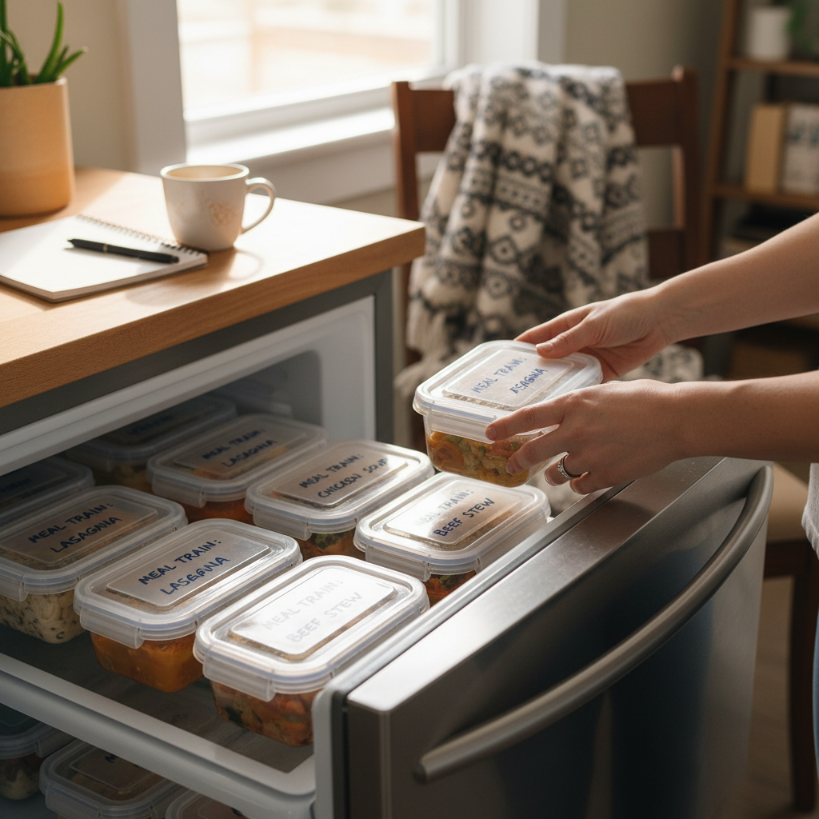
Gone are the days of clipboards and phone trees. You need a central hub where everyone can see the schedule in real-time.
- MealTrain.com — The gold standard. It’s free for basic use and incredibly intuitive.
- Give InKind — Great if you want to include things like childcare requests or dog walking alongside meals.
- Google Calendar — Functional, but requires more manual entry and doesn’t track dietary needs as clearly.
My advice? Stick to a dedicated meal train site. It sends automatic reminders to the volunteers, which saves you from having to play “nagger” when someone forgets it’s their night to cook.
Step 2: Gather the Vital Stats
Before you send out the link, you need the “Fact Sheet.” Don’t guess. Send a quick text to the recipient (or their partner) and get the following:
- Allergies and Aversions: Be specific. “No dairy” is helpful, but “We use almond milk but can’t do cashews” is better.
- Drop-off Logistics: Where should the food go? Is there a cooler on the porch? Do they want people to ring the bell, or is a “text when it’s dropped” policy in place?
- Best Time to Drop Off: Usually between 4:00 PM and 5:30 PM is the sweet spot before the “witching hour” hits.
- Favorite Takeout: In case someone wants to send a gift card or DoorDash instead of cooking.
- Family Size: How many adults? How many kids? Are the kids picky?
Step 3: Set a Realistic Schedule
It’s tempting to fill every single day for three weeks, but that often leads to fridge overload.
Space it out. I usually recommend scheduling meals for Monday, Wednesday, and Friday. This allows the family to eat leftovers on the off-days and prevents the “lasagna mountain” I dealt with. If the community is huge and everyone wants to help, extend the train for more weeks rather than doubling up on days.
Step 4: The “No-Contact” Protocol
This is the most important part of the chaos-free plan. Make it clear in the instructions: A meal train is not a social visit.
Unless the family has explicitly invited people in to hold the baby, the default should be a “drop and dash.” New moms are often in adult diapers, struggling with breastfeeding, or desperately trying to nap. The last thing they need is to feel like they have to host guests or “perform” wellness.
Instruct volunteers to:
1. Pack food in disposable containers (so no one has to wash or return dishes).
2. Text the recipient when the food is on the porch.
3. Include a brief note with reheating instructions.
Step 5: Diversify the Menu
As the organizer, keep an eye on the sign-up list. If you see three people in a row signed up for “Heavy Casserole,” send a gentle nudge or update the description.
Encourage volunteers to think outside the box:
* Breakfast Batches: Frozen breakfast burritos or a big container of overnight oats.
* Fresh Salads: Sometimes you just need something crunchy and green after a week of comfort food.
* Snack Baskets: Lactation cookies, beef jerky, dried fruit, and easy-to-grab protein bars.
Pro Tips from a Real Mom
- The Cooler Method: Tell the family to put a large cooler on the front porch with a few ice packs. This protects the food from pets, bugs, and weather, and it reinforces the “no-contact” boundary.
- The “Second Hand” Contact: If you are the organizer, list *your* phone number for questions from volunteers. Don’t make the new mom answer “Where do I park?” ten times a day.
- Gift Card Options: Always include a link for GrubHub or UberEats. Some people aren’t cooks, and a hot pizza delivered at 7:00 PM is a total lifesaver.
- Think About the Siblings: Remind volunteers to throw in a pack of juice boxes or a bag of grapes for the big brother or sister. It makes them feel seen during a big transition.
What I’d Skip
Don’t worry about being fancy. This isn’t a dinner party. Skip the complicated garnishes and the “assemble-it-yourself” taco bars that require the mom to chop six different toppings. The goal is “heat and eat.” Also, skip anything extremely spicy unless you know for a fact the family loves it; spicy food and a sensitive newborn tummy (via breastmilk) don’t always mix well.
FAQ
How long should a meal train last?
Typically, two to four weeks is the sweet spot. The first two weeks are usually the most intense, but the “support cliff” happens around week three when the partner goes back to work. That’s when the help is truly needed.
What if I don’t know many people to invite?
Quality over quantity. Even just three friends taking turns can cover a week. You can also reach out to their church group, work colleagues, or local “Mom’s Club” if they are members.
Should I include a “Baby Update” on the page?
Only if the parents want it. It’s a nice way to share a photo and the birth stats once, so the mom doesn’t have to text 50 people individually.
Is it okay to ask for specific groceries instead of meals?
Absolutely. You can add a “Grocery List” section for things like milk, eggs, and toilet paper. Sometimes a gallon of milk is more helpful than a quiche.
This is what worked for me — always check anything health-related with your OB, midwife, or pediatrician.
Final Thoughts
Organizing a meal train is one of the most tangible ways to love someone through a major life change. By handling the logistics, you’re giving your friend the greatest gift of all: time and headspace. Keep it simple, keep it organized, and watch how much a few warm meals can transform those blurry early days.