


Having the right ingredients is crucial for nutritious meal planning. A guide to successful meal prep includes choosing versatile and healthy items. These staples let you create delicious meals quickly.
Meal prep containers, Mason jars, and instant pots can save you time. They also help lessen food waste.
Key Takeaways
- Meal prep containers enhance efficiency and reduce food spoilage.
- Mason jars save up to 10 minutes in the morning.
- Flat-stored meals in gallon freezer bags increase freezer capacity by 25%.
- Using sectioned containers reduces food waste by 30%.
- Quality knife sets like Rachael Ray’s can last over 10 years.
- Food processors cut prep time by 50%.
- Instant pots reduce cooking times by up to 85%.
- Organized refrigerators with storage bins increase space functionality by 30%.
- Labeling containers improves meal retrieval efficiency by 40%.
With these key ingredients and tips, meal planning becomes easy. You can stay on track with healthy eating all week long.
Why Fresh Fruit is a Meal Prep Staple
Using fresh fruit in meal prep boosts nutrition and convenience. Adding fresh fruit to my cooking has made meals tastier and more varied. Let’s look at how using seasonal fruits and quick, fresh fruit snacks can improve our diets.

Choosing In-Season Varieties
Selecting seasonal fruit is key for better nutrition and saving money. Seasonal fruits like strawberries and blueberries are cheaper and full of nutrients. They are ideal for meal prep because they’re tasty and healthy.
Quick Snacks and Breakfast Options
Fresh fruit is perfect for quick snacks and breakfasts. I keep sliced fruits like apples and watermelon ready to eat. These snacks give me a fast energy boost.
Fruit is great on yogurt or in smoothies for breakfast. This method ensures I eat different fruits and saves me time in the mornings.
Adding fresh fruit to my meal prep has improved my diet and made it easy to enjoy seasonal tastes all year. By preparing fruits on a set day, I make my week simpler and keep my meals healthy.
Ready-To-Eat Protein: A Time Saver
Using ready-to-eat protein options can really save you time spent cooking. These quick and easy protein solutions are perfect for those with busy lives. Prepared meats, seafood, and eggs offer the protein you need without the long cook times. Let’s look at some key ready-to-eat proteins and what makes them great.
Pre-cooked Meats and Fish
Pre-cooked meats and fish like grilled chicken or smoked salmon are perfect for quick meals. They stay fresh in the fridge for 3 to 4 days. That’s why they’re great for folks who only have time to meal prep once or twice a week. Let’s dive into the good stuff these protein sources offer:
| Protein Source | Protein Content | Serving Suggestion |
|---|---|---|
| Grilled Chicken Breast | 35g per 5 oz | Salads, wraps, pasta |
| Smoked Salmon | 40g per 6 oz | Bagels, salads, avocado toast |
| Turkey Wrap | 28g per wrap | Wraps, sandwiches |
| Stir-fried Shrimp | 34g per serving | Stir-fries, salads, grain bowls |
These options are not just packed with protein. They also help you stay away from unhealthy last-minute food. By adding them to your meals ahead of time, you’ll always have quick, healthy food ready.
The Versatility of Eggs
Eggs are super adaptable and loaded with nutrients for your meal prep. You can enjoy them boiled, scrambled, or as an omelette, providing protein anytime. With just two hard-boiled eggs, you get about 12g of protein. This makes eggs a fantastic way to boost your protein easily. Check out these egg meal ideas:
| Egg Dish | Protein Content | Meal Suggestion |
|---|---|---|
| Hard-Boiled Eggs | 12g per two eggs | Snack, breakfast side |
| Scrambled Egg Whites | 18-20g per serving | Breakfast, brunch |
| Omelette | Up to 20g per omelette | Breakfast, lunch |
| Frittata | Up to 22g per serving | Lunch, dinner |
By using eggs in your meal prep, you can make your food fun and healthy. Eggs are an easy-to-carry protein source for breakfast or snacks. They help keep your energy up and support your health. Mixing pre-cooked meats, fish, and eggs in your meals gives you tasty protein rich options. All without giving up your time or variety.
Vegetables: Nutrient-Packed Essentials
Vegetables are key for any healthy meal, packed with nutrients important for a balanced diet. They are nutrient-dense, offering lots of nutrients for few calories. This is great for those trying to get the most nutrients without consuming too many calories.
A meal should have half its portion as vegetables. This way, everyone can enjoy their nutritional benefits. From leafy greens like spinach to crunchy carrots and bell peppers, a variety of vegetables makes meals colorful and full of necessary vitamins, minerals, and fibers. They can be raw, roasted, or added to salads and wraps.
Using fresh vegetables in your meals can greatly improve your diet’s quality. Zucchinis and Brussels sprouts, for example, are versatile in cooking. Adding different colorful vegetables to your diet helps meet nutritional needs and keeps meals interesting.
| Vegetable Type | Nutritional Benefits | Preparation Methods |
|---|---|---|
| Leafy Greens (Spinach, Kale) | High in vitamins A, C, K, and folate | Salads, Smoothies, Sautéed |
| Cruciferous Vegetables (Broccoli, Brussels Sprouts) | Rich in vitamins C, K, and fiber | Roasted, Steamed, Raw |
| Root Vegetables (Carrots, Beets) | Packed with antioxidants and fiber | Roasted, Raw, Pickled |
Adding colorful and nutrient-rich vegetables to your meals isn’t just good for your diet. It also boosts your overall health and wellness.
Comparing Fresh and Frozen Produce
Choosing between fresh and frozen vegetables requires considering the benefits of both. Frozen vegetables offer nearly the same nutrition as fresh ones. Plus, they are convenient for busy days or when fresh produce isn’t great. By using frozen veggies like corn, broccoli, or green beans in your meals, you keep eating healthy all year round.
The Benefits of Frozen Vegetables
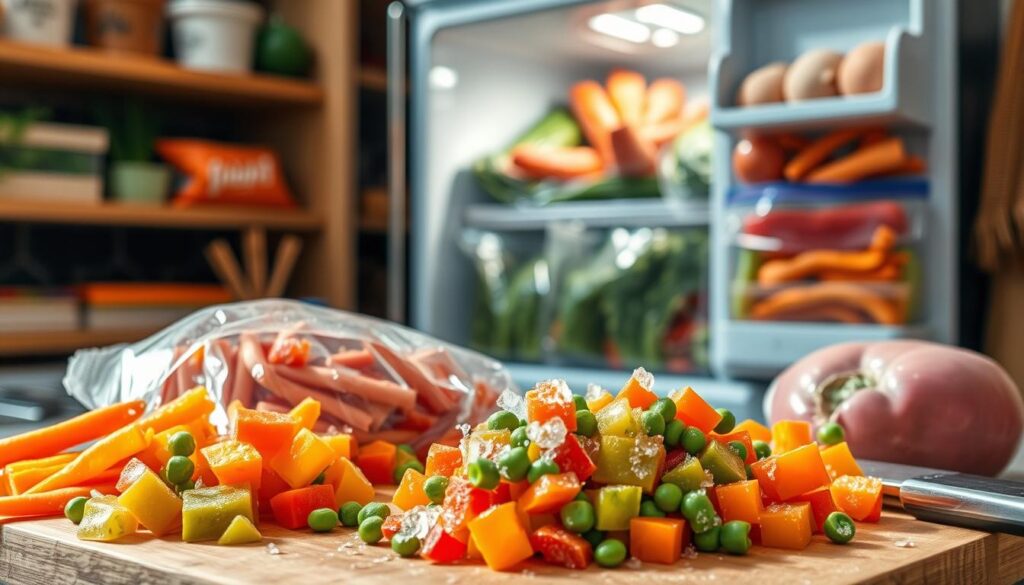
Frozen vegetables keep their quality really well. They are frozen soon after being picked, keeping in all the good stuff. Fresh veggies, though, can lose nutrients while they wait to be eaten. Frozen veggies also create less waste since almost all parts are used. This is better for the planet than the waste fresh veggies can make.
Maintaining Nutritional Value
Studies show that frozen produce can be as nutritious as fresh ones. Fresh produce can lose half of its worth after trimming and going bad, raising its cost. Frozen fruits and veggies waste less, saving money. A study found that fresh and frozen produce are not that different in nutrition, proving that frozen can be just as good as fresh.
| Factors | Fresh Produce | Frozen Produce |
|---|---|---|
| Quality Maintenance | Decreases over time in the supply chain | Maintained through quick processing and freezing |
| Usability | Often less than 50% due to trimming and spoilage | 100% usable with minimal trim waste |
| Food Waste Contribution | High, especially with spoilage | Low, often repurposed as animal feed |
| Cost Consideration | Higher due to labor, trimming, and spoilage | Lower with consistent quality |
| Nutritional Value | Declines after a few days post-harvest | Maintained or sometimes better than fresh |
Essential Dairy and Alternatives
Adding dairy to your meal prep can really up the nutrition and taste. Milk, cheese, and yogurt are key for lots of dishes. Let’s explore how to best use dairy and its alternatives in your meals.
Greek Yogurt: A Protein Rich Option
Greek yogurt stands out among dairy for its high protein. It’s great for upping protein intake. You can use it in parfaits, smoothies, or as a healthier swap for sour cream. It’s also easier to digest, thanks to the fermentation process. This is good news for those who struggle with lactose. Plus, Greek yogurt brings a creamy taste and a bit of tang to recipes, without taking over the flavor.
Choosing Between Milk and Milk Alternatives
Choosing between regular milk and its alternatives depends on your diet and nutritional needs. Regular milk is loaded with calcium and protein, good for bones and muscle repair. Yet, because 65% of folks worldwide are lactose intolerant, many need alternatives.
Options like almond, soy, and coconut milk are packed with nutrients, including calcium and Vitamin D. They offer similar benefits to dairy milk but are lactose-free. This is a relief for people with dairy allergies, which is common among young children. These alternatives work well in recipes, like cereal, drinks, and baking. Each milk alternative has its own taste and texture. For example, almond milk is lighter, while soy milk is better for baking because of its thickness.
| Nutrient | Regular Milk | Almond Milk | Soy Milk |
|---|---|---|---|
| Calcium | 300 mg | 450 mg (fortified) | 300 mg (fortified) |
| Protein | 8 g | 1 g | 7 g |
| Vitamin D | 2.5 mcg | 2.4 mcg (fortified) | 2.9 mcg (fortified) |
| Saturated Fat | 4.5 g | 0 g | 0.5 g |
| Lactose | 12 g | 0 g | 0 g |
Quick and Healthy Snacks
Prepping meals means you need quick, healthy snack options. Let’s talk about how hummus and the right cheeses can help.
The Versatility of Hummus
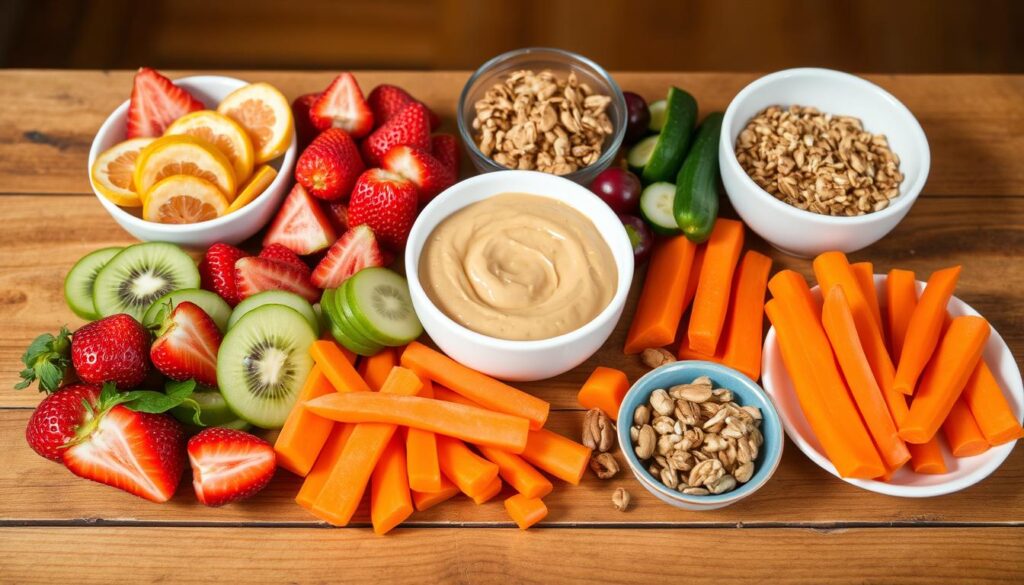
Hummus is full of protein and great as a dip or spread. It tastes good with veggies like carrots and cucumbers, and with whole-grain crackers. Using hummus can help you have tasty, healthy snacks all week.
Cheese Choices for Healthy Eating
Healthy cheeses include mozzarella, feta, and cheddar. They offer different tastes and health benefits for your snacks. Mozzarella is lower in calories, great with tomatoes and basil.
Feta adds a tangy flavor to salads or quinoa. Cheddar, filled with calcium and protein, is great with apples or crackers. This makes your snacks both healthy and enjoyable.
By adding these to your meal prep, you’ll always have healthy snacks ready. This supports your healthy lifestyle goals.
Ingredients for Healthy Meal Prep Success
Successful meal planning is all about variety. It involves different foods like protein, vegetables, and dairy for a balanced diet. Using many ingredients meets various nutritional needs and keeps meal prepping fun and lasting.
Adding many vegetables gives you vital vitamins and minerals. Pair fresh veggies with proteins like cooked meats, fish, or eggs for meals full of nutrients.
Using different proteins in your meals adds taste and meets various eating habits. For dairy, choose Greek yogurt for a protein boost or pick milk alternatives to fit your diet.
| Ingredient Type | Examples | Benefits |
|---|---|---|
| Vegetables | Broccoli, Spinach, Carrots | Rich in vitamins and minerals, boosts immune health |
| Proteins | Chicken, Salmon, Eggs | Essential for muscle growth, high in essential amino acids |
| Dairy and Alternatives | Greek Yogurt, Almond Milk, Cheese | Offers calcium and probiotics, supports bone health |
| Fruits | Berries, Apples, Bananas | High in antioxidants, provides natural sweetness |
Choosing the right ingredients is key to meal prep success. By mixing food groups, you get meals that are good for you, taste great, and have variety. This makes every meal exciting and nutritious.
Conclusion
Our journey through meal prep success has taught us the importance of choosing the right ingredients. Fresh fruits, proteins, nutrient-rich vegetables, and dairy are key for a balanced meal plan. Incorporating these ingredients ensures meals last longer. This way, you can enjoy a healthy diet that meets your goals.
To build muscle or lose fat, following macronutrient ratios helps. For example, eating 30% protein, 30% grains, and 40% veggies is beneficial. Use good containers for easy portion control and keep meals fresh. A well-organized freezer means less waste and always having something good to eat.
Despite the convenience of food delivery, making your meals is empowering. Limit your meal prep research to 30 minutes to save time. Consider getting help from a meal planning expert. Benjamin Franklin said, “Failing to plan is planning to fail.” With these tips, meal prepping becomes a rewarding routine, leading to a healthier lifestyle.
FAQ
What are the benefits of having fresh fruit for meal prep?
Why should I include ready-to-eat proteins in my meal prep?
What makes vegetables an essential part of meal prep?
How do frozen vegetables compare to fresh ones?
How can dairy products and their alternatives enhance meal prep?
What are some healthy snack options to keep on hand?