


If you’re like me, losing belly fat after a baby is a goal. Yet, you’re exhausted all the time. We don’t want harsh diets or quick fixes. We need a plan that understands our busy, messy lives and a healing body.
Right after birth, it’s common to quickly lose weight. This is often due to normal fluid shifts and the healing process. But, belly fat might linger even when you start to lose weight elsewhere.
This guide is for the new U.S. mom looking for realistic weight loss. It focuses on fitness that aids core recovery without harsh workouts. We’ll look into gentle exercises, gradual steps, and eating well without strict diets.

The plan is simple: get back to a flatter belly with smart exercise and good meals. Support for breastfeeding, wearing core garments, massages, and taking care of basics are all part of it. The aim is feeling strong and toned, not chasing perfection.
I’m setting a realistic timeline for myself. Typically, it might take 9 to 12 months to start feeling like your old self. Being patient is just as crucial as following any exercise routine.
High stress reminds me to lean on support systems. For instance, Minnesota Housing reported in 2024 they helped many with $1.96 billion. Knowing there are resources available can really lessen the burden when times are tough.
Why Postpartum Belly Fat Happens and Why It’s Normal
Looking down and seeing a soft belly isn’t a sign of failure. It’s just how the postpartum body adapts over time. Learning about these changes makes it easier for me to stay calm and make good decisions.
The “mommy pooch” isn’t my fault. It happens for many clear reasons. Things like fat buildup, a uterus shrinking back, muscles stretching, and skin healing all play a part.
Extra fat stores for nourishment and breastfeeding energy
In the last part of pregnancy, my body stored extra energy on purpose. Hormones helped me save nutrients as fat. This supports both recovery and caring for my newborn.
If I’m breastfeeding, this fat storage helps with weight loss over time. But losing weight can be slow, and I might get hungrier as I try to produce enough milk.
My uterus growth and the 6–8 week involution timeline
During pregnancy, my uterus grew a lot, from about 2.5 ounces to 2 pounds. It also expanded to hold up to 500 times more than before.
After giving birth, it begins to shrink, starting about 72 hours later. This shrinking, or involution, usually takes about 6–8 weeks. This affects how my belly looks each day.
Diastasis recti from abdominal muscle separation during late pregnancy
Diastasis recti is another reason for postpartum belly. It’s when the muscles in the midline of the abdomen separate. About 66% of women experience this in the third trimester.
For some, this muscle gap can remain postpartum, affecting 30–60% of women. If my core isn’t strong yet, my belly can stick out, even with healthy eating.
Loose skin after 9 months of stretching and changes in skin elasticity
Then there’s the issue of loose skin, which is normal but can feel frustrating. The skin stretched for months, and now it doesn’t snap back right away. Collagen and elastin fibers weaken, so my skin takes time to recover.
But, loose skin can get better with time, water, protein, and gentle exercise. All these body changes together explain why postpartum belly fat happens.
When I Can Safely Start Again After Birth (Even If I’m Tired)
I’m eager to get moving again, but I know healing is key. When can I start exercising after having a baby, especially with little sleep? I’m aiming for a gentle, steady return to fitness, without rushing it.
Getting my doctor’s clearance and listening for red-flag symptoms during exercise
I wait for my doctor’s okay before doing more than light activities. This is important because everyone’s recovery from birth is different due to factors like blood loss and pelvic floor strain.
When working out after the baby, I listen to my body closely. If anything feels wrong, I stop. I’m alert for signs like heavy bleeding, strong dizziness, intense pelvic pain, chest pain, severe headaches, or unexpected swelling.
Some days, light exercises are all I can manage. Even gentle stretches and focusing on my breathing are a good start. This can be okay from day one if my doctor says it’s safe and it feels alright.
Building back slowly by increasing workout length over time
With my doctor’s approval, I slowly build up my exercise routine. Starting with short sessions, I gradually increase the time each week. This prevents joint soreness and increased tiredness.
If I’m not getting much sleep, I stick to simple, repeatable exercises. Finding a gym that offers childcare can really help, by making it easier for me to consistently work out.
Why postpartum exercise can support overall health and may help lower postpartum depression risk
Exercising helps improve my blood flow, energy, and mood, regardless of quick weight loss. It makes me feel more like myself, amidst the busy baby schedule and sleepless nights.
Exercise also plays a role in reducing postpartum depression risks. A gentle, feasible workout routine after giving birth supports my health and mood, especially if I keep it consistent.
Lose Belly Fat After Baby With Gentle, Low-Impact Movement
I don’t look for a boot camp when I’m lacking sleep. Instead, a gentle workout helps stabilize me again.
Starting with soft movements is key to fix my abs, better my posture, and slowly get back to normal without hurrying my body’s healing.
Walking routines I can scale up from easy strolls to power walks
My walks begin short and flat, ensuring I keep my posture upright and shoulders relaxed. I take cues from my body—if I feel any discomfort or leaking, I slow down or cut the walk short.
Gradually, I lengthen the walks, include mild inclines, and occasionally quicken my pace. This approach makes it feel achievable to shed postpartum weight by walking, without it feeling like a punishment.
Pelvic floor basics: kegels for support and incontinence prevention
My pelvic floor is my base. Combining gentle lifts with complete releases works best for me in doing kegels after giving birth.
I keep my exercise reps precise and avoid tensing up elsewhere. These steps fortify me against strains when standing, coughing, or holding my baby.
Core re-connection: deep belly breathing and simple pelvic tilts
Before aiming for abs, I focus on linking my core with my breath. This technique coordinates my breathing with my deep belly and pelvic muscles.
Then, I gently add pelvic tilts, either lying down or against a wall. It’s a slow movement, imagining I’m zipping up my front.
Progressions that target my abs safely: head lifts, shoulder lifts, and curl-ups
Once my breathing and alignment feel right, I move forward in small steps. Starting with modest head lifts, then shoulder raises, and careful curl-ups, but only if my abs stay tight without any discomfort.
I treat these exercises more like skill-building rather than a challenge. I stop at any signs of discomfort or improper form.
Yoga or Pilates for mobility, core stability, and full-body strength
When I need to reset, yoga is my go-to. It frees up my hips, chest, and back, especially after long periods of nursing or cuddling. I pick slow routines that allow me to fully breathe into each pose.
If I’m looking for a bit more structure, I turn to Pilates. It helps me focus on core strength with a steady pace, keeping my alignment in check, my glutes strong, and movements controlled.
Postpartum Nutrition That Helps Me Slim Down Without Restricting Calories
I don’t just eat small amounts; I make sure my meals are full and satisfying. This helps keep my energy up, even when I don’t sleep much. This approach helps me lose weight after pregnancy without having to diet, avoiding constant hunger and guilt.
I reach out to my OB-GYN for advice and think about seeing a dietitian. This support helps me balance my diet with breastfeeding, especially on exhausting days.
Eating well after giving birth means keeping it doable for me. I cut back on processed foods, sugar, and alcohol to avoid getting hungry and tired fast. My goal isn’t to be perfect but to snack less often.
I choose meals with good proteins like eggs, Greek yogurt, beans, chicken, and salmon after giving birth. I include healthy fats such as avocados, olive oil, and nuts. With plenty of vegetables, I don’t feel the need to snack mindlessly.
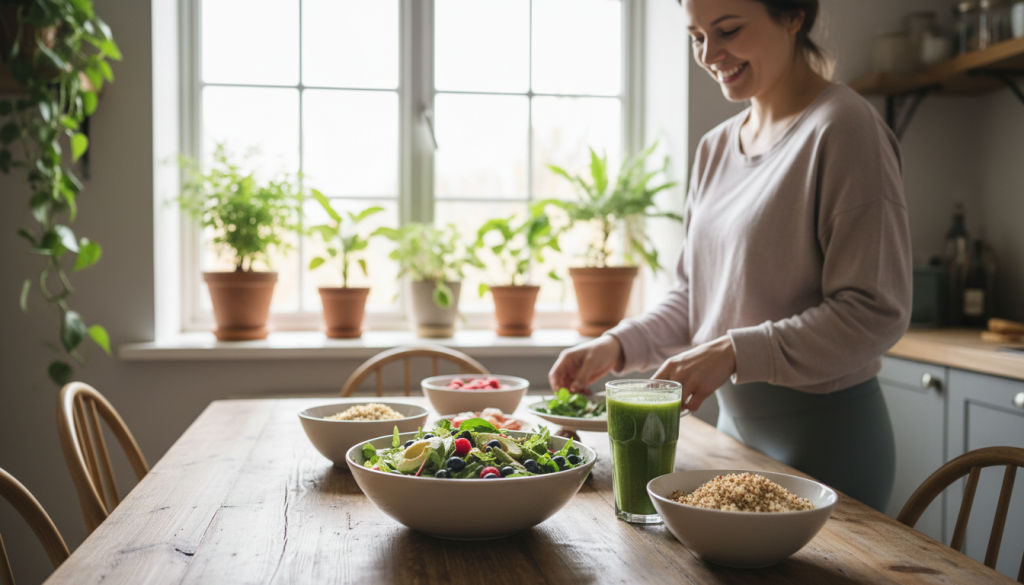
Staying hydrated is key for recovery after having a baby. In the early weeks, I lose extra body fluid and feel very thirsty. Drinking water helps with breastfeeding, digestion, and keeping my skin from feeling tight and dry.
I also focus on vitamins and minerals, particularly when breastfeeding. A postnatal vitamin covers needs like iron and vitamin B12. For healing my skin and tissues, I look for vitamin A, vitamin E, and omega-3 from fish or supplements.
I keep my skincare goals realistic. Creams with collagen make my skin smoother and softer, but they don’t fix everything. The best results come from eating well, drinking enough water, and sticking to healthy habits.
Simple Recovery Supports That Make a Difference When I’m Exhausted
When I’m out of energy, small tools help me keep up with daily tasks. They don’t take the place of rest or healing. But they do make moving, eating, and resting easier.
Breastfeeding and using stored energy over time
After giving birth, my body uses stored energy to produce milk. This is why some people lose weight while breastfeeding. But it can be slow and uneven.
Sometimes, my jeans don’t fit, but that’s common. Drinking water, eating regularly, and managing stress are key. They’re as important as when to feed.
Girdles and gentle core support during movement
A postpartum girdle can help me feel more stable. It’s about feeling secure, not getting thinner.
These girdles help me with daily activities, like cooking and walking. The right one offers support without discomfort.
Deep tissue massage for stress relief and sleep
If carrying and feeding make my back and shoulders hurt, a deep massage can help. It reduces muscle pain, calms me, and helps with stress. This can make sleeping easier.
Just one massage can help me relax fully. It can also reduce swelling when combined with water, stretching, and rest.
Conclusion
Losing belly fat after having a baby involves patience. The journey back to my pre-baby body is guided by real biology. It’s not just about how determined I am. The uterus can take up to 8 weeks to shrink back to normal. Fat changes, diastasis recti, and loose skin often take longer to recover.
For many, it might take up to a year to fully “bounce back.”
When I began my postpartum fitness journey, safety was my priority. I always made sure to get a doctor’s okay before starting exercises. I learned to be alert for any warning signs. This includes heavy bleeding or feeling unusually dizzy.
I started slow with easy exercises. This included walking, working on my pelvic floor, deep breathing, and pelvic tilts. Once I felt stronger, I gradually added exercises to strengthen my core safely.
Nutrition played a big role in my recovery too. Instead of cutting calories, I focused on eating better quality foods. I reduced sugar, alcohol, and processed foods. And I ate more protein, healthy fats, and veggies. Staying hydrated was also key. This helped me feel better, supported breastfeeding, and helped with losing weight without feeling tired all the time.
When I felt exhausted, I found ways to keep going instead of giving up. Breastfeeding helped me use up stored fat. Wearing compression garments made moving around more comfortable. Getting massages helped with stress and sore muscles. I also asked for help with childcare when needed to keep my routine consistent. By celebrating small steps forward, I gradually saw progress in losing belly fat after baby.