


After my baby was born, I realized something important. Eating right is just as key for me as it is for my little one. I need meals that give me energy and help me heal, especially if I’m breastfeeding.
I planned my day around three main meals and a couple of snacks. My goal was to mix protein, carbs full of fiber, and good fats to stay full. This way, I could enjoy meals that helped me recover without having to follow any hard rules.
I made sure to have easy meals ready to go: things like soups from the freezer, chili, and quick sheet-pan dinners. Ingredients like oats, yogurt, eggs, and peanut butter were always on my list. They’re great for making meals that keep you full, even on your busiest days.

Since breastfeeding made me more hungry and thirsty, I made sure to drink a lot and add enough salt to my food. If I got really hungry, I’d go for eggs in any style, smoothies, or even breakfast for dinner. This plan helped keep things smooth and simple. And it gave me a trusted list of meals that helped with weight loss after having a baby.
Why Eating Well Postpartum Matters for Recovery, Energy, and Milk Supply
I see food as a part of my healing process after having a baby. Eating right helps me heal, keeps my energy up, and ensures I have enough milk for my baby. I make meals that consider the extra calories I need for breastfeeding. This helps me feel better and take good care of my little one.
Fueling recovery after birth and potential C‑section healing
After giving birth, my body needs to repair itself. Protein is key for fixing tissues, especially if I’ve had a C-section. Foods rich in iron and omega-3s like salmon help refill my body’s needs and reduce swelling. Adding greens gives me important nutrients for bones and overall health.
I stick to simple meals like one-pot stews and slow-cooker recipes. They make eating well easier and support my recovery without any stress.
Meeting increased nutrient needs while breastfeeding
When breastfeeding, I need to eat more but focus on healthy foods. I go for extra protein, fruits, veggies, and grains. Drinking plenty of water throughout the day is also key. Foods like eggs, beans, and seafood provide essential nutrients for my baby’s brain.
I also make sure to get calcium and iron from various sources. This not only helps my energy levels but also ensures a steady milk supply.
Why this isn’t the time for strict restriction
Avoiding strict diets after giving birth helps keep my milk supply up and my metabolism steady. I create balanced meals with good protein, fiber, and fats. I cut down on sugar instead of cutting calories drastically.
This way, I can lose weight in a healthy manner while staying strong and keeping my mood and milk flow good.
Simple strategies I use to remember to eat and hydrate
I have a flexible eating schedule: three main meals and a few snacks. Setting alarms on my phone reminds me to take breaks to eat. I keep my freezer stocked and use a baby carrier to make food prep easier.
To stay hydrated, I drink water during every breastfeeding session and use electrolytes after exercise. A bit of magnesium at night improves my sleep, which helps regulate my appetite and choices during the day.
Macronutrient Blueprint: Protein, Fiber‑Rich Carbs, and Healthy Fats That Keep Me Full
I keep my meals quick and easy, focusing on key nutrients after having a baby. I make sure each meal has protein, fiber-rich carbs, and fats to help my energy and milk. This way, I feel good and don’t get too hungry.
How I build balanced plates for steady energy
At each meal, I aim for protein, lots of fiber-rich carbs, and some healthy fats. I avoid added sugars and choose whole foods to keep from feeling tired later.
My guide is simple and quick. If a meal prep takes longer than 15 minutes, I pick a quicker option. But I still make sure it’s balanced.
Protein targets I aim for and easy sources
I try to get about 120 grams of protein each day, aiming for 40 grams a meal. It helps me stay full, maintain my muscle, and heal while I’m breastfeeding.
My meals often include Greek yogurt, cottage cheese, eggs, chicken, or beef. For quick options, I use tofu, beans, or a whey protein shake. A yogurt bowl is a speedy breakfast that works for me.
High‑fiber carbs for stable blood sugar and satiety
I go for oats, lentils, black beans, chickpeas, quinoa, and starchy veggies like sweet potatoes. Adding berries and leafy greens makes meals more filling.
These carbs help keep my energy stable. I avoid refined grains and sweets to dodge energy spikes and cravings.
Healthy fats that support hormones and milk production
I add olive oil, avocado, nuts, seeds, and whole-milk dairy to my meals. Eating fish like salmon or mackerel gives me important omega-3s.
Adding these fats to my diet makes my meals more satisfying. A bit of olive oil on a bean and quinoa bowl is perfect for a balanced meal.
Postpartum Weight-Loss Meal Ideas
I make meals simple, hearty, and quick to enjoy while looking after my baby. I focus on easy breakfasts, on-the-go lunches, one-dish dinners, and protein-rich snacks. These keep me satisfied without spending too much time cooking.
Breakfasts that are fast, filling, and freezer‑friendly
I love overnight oats, yogurt parfaits, and avocado toast with egg in the mornings. I freeze egg muffins and oatmeal for quick meals. For extra busy mornings, I make a peanut butter banana smoothie or a low-sugar shake.
Weekends are for making breakfast burritos and protein waffles in batches. These breakfasts help me stay on track with my protein intake fast.
Grab‑and‑go lunches I can assemble one‑handed
I eat lentil soup, quinoa with veggies, and turkey or chicken wraps. Mixing canned salmon or tuna with grains makes a quick meal. Avocado egg salad on bread or crackers is a favorite too.
I love using leftovers: kale salad with chicken, cottage cheese with apples, or sweet potato with toppings. These lunches save time and keep me going.
One‑pan and slow‑cooker dinners with minimal cleanup
Sheet-pan chicken with veggies makes dinner easy. I also cook salmon or red lentil dhal on one pan. Tacos or salmon patties make cleaning up a breeze.
On busy nights, I use the slow cooker for beef stew, vegetarian chili, or teriyaki chicken. These meals let me spend more time on bedtime routines.
Satisfying snacks that bridge the hunger gap
For snacks, I eat Greek yogurt, PB toast, roasted chickpeas, or boiled eggs. Protein shakes or cottage cheese with fruit fill me up. I also keep granola for quick parfaits and blend green smoothies for energy.
Choosing high-protein snacks helps me get through the afternoon. It also supports my milk supply and keeps cravings away.
Nutrients I Prioritize While Breastfeeding
I keep my meals simple and consistent to ensure my milk is nutritious and I have energy. I focus on nutrients that help me recover and help my baby grow. These choices are easy to fit into real life, taste great, and keep me full between feeding times.
Choline from eggs, legumes, and cruciferous veggies
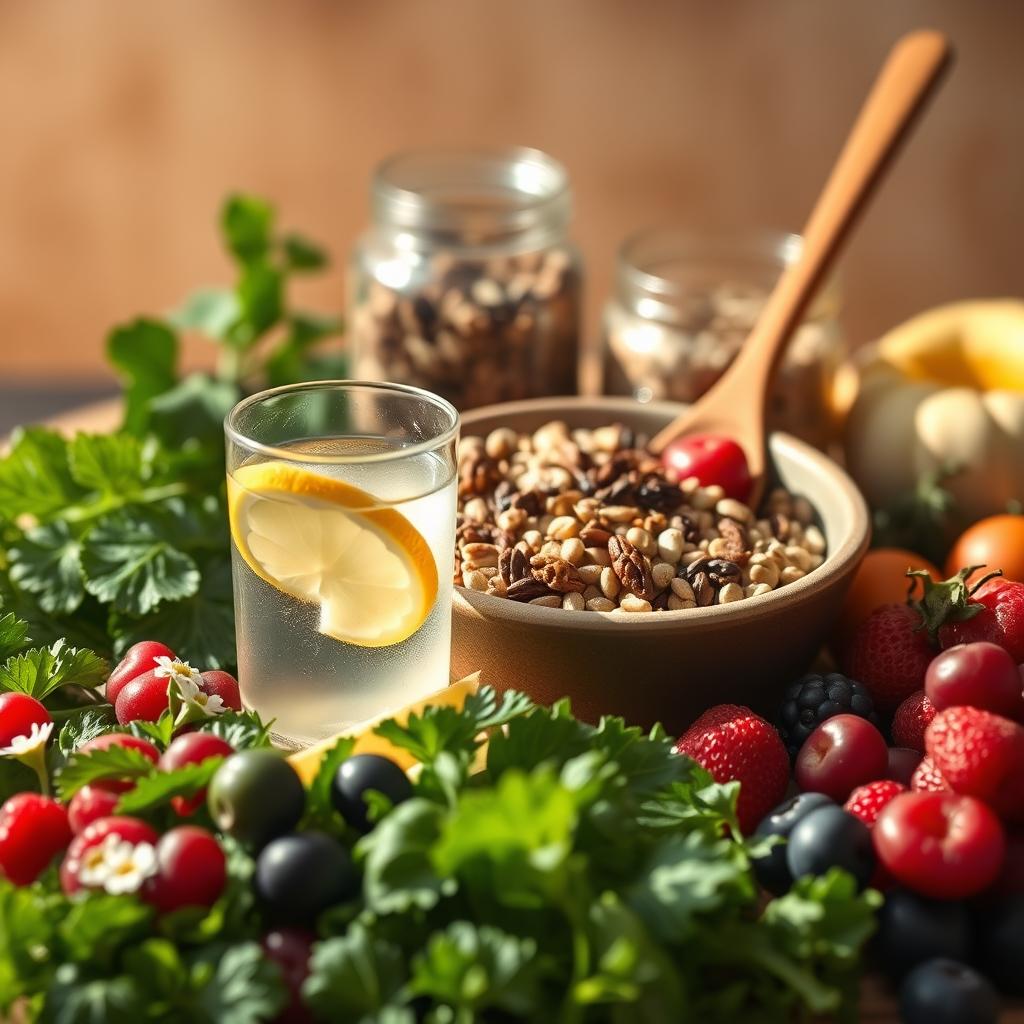
In my postpartum diet, eggs are often my go-to breakfast, or I mix chickpeas into my salads. I regularly eat broccoli, cauliflower, and kale, either in bowls or stir-fries. If I’m not getting enough, I talk to my doctor about using my prenatal vitamins or a separate choline supplement.
Iron and iodine for energy and baby’s brain development
I make sure to eat red meat or salmon weekly for iron and iodine, along with beans, lentils, and leafy greens. At home, I cook with iodized salt and eat dairy or seafood for extra iodine. I also check my multivitamin has the recommended 150 mcg of iodine while breastfeeding.
Calcium and vitamin D for bone health
To meet my needs for calcium and vitamin D, I try to have about three servings of calcium-rich foods daily. Choices like milk, yogurt, or cheese are simple, and sometimes I switch to fortified soy or almond milk. I also get sunlight for vitamin D and eat eggs or canned salmon with bones for an extra boost.
Omega‑3s from salmon, sardines, walnuts, and chia
Getting enough omega-3s after giving birth is very important to me. I eat salmon or sardines several times a week and add walnuts or chia seeds to my oatmeal or yogurt. For a little extra omega-3, I put flax or hemp seeds in my smoothies.
Fluids and electrolytes to match higher hydration needs
I make sure to drink about nine glasses of liquids a day, including milk, tea, and broth. For extra hydration and electrolytes while breastfeeding, I season my food with iodized salt and sometimes mix in an electrolyte solution like LMNT grapefruit. On days when I’m breastfeeding more, I include magnesium at night and creatine with breakfast, after getting the OK from my healthcare provider.
My Satisfying Listicle: Meal Ideas That Check Every Box
I have a meal list on my fridge for quick decisions. It helps during busy mornings, quick lunch breaks, and easy evenings. These meals focus on high-protein breakfasts, fast lunches, and simple dinners so feeding is easy.
Comforting breakfasts: oats, yogurt parfaits, baked oatmeal, chia pudding. I switch between overnight oats and chia pudding, adding berries or nuts. Greek yogurt parfaits with fruit start my day off with protein. Baking oatmeal with blueberries lets me freeze portions for quick reheats.
Protein‑packed “anything eggs”: omelets, frittata muffins, breakfast burritos. Eggs give me protein and choline in the morning. I make batches of frittata muffins to freeze. I fill omelets with any veggies I have. For on-the-go mornings, I prepare breakfast burritos with eggs, beans, and salsa.
Lunch heroes: lentil soup, quinoa bowls, chicken wraps, tuna or salmon salads. I cook lentil soup on Sundays for the week. Quinoa bowls with veggies are easy to keep fresh. Chicken wraps and salads with tuna or salmon are quick to prepare and nutritious.
Dinner favorites: sheet‑pan chicken, salmon quinoa bake, stews, dhal, tacos. Sheet-pan dinners make evenings simpler, combining ingredients on one tray. For variety, I bake a salmon quinoa dish or simmer dhal. Tacos with leftovers are always a hit for a new meal.
Smart snacks: PB toast, hard‑boiled eggs with whole‑grain crackers, protein balls. I have protein snacks ready for energy dips. Peanut butter toast, hard-boiled eggs, and protein balls with chocolate chips are my go-to. They keep me going until the next meal.
These meal ideas make sure I’m always fed and happy. My meal list guides me from breakfasts to dinners, and even snacks. It makes sure I get what I need, without the stress.
Time‑Saving Prep and Cooking Methods for New‑Parent Life
I make meals that are easy, quick, and can be reheated. I use freezer meals, gadgets, and help from friends and family. This way, I’m less stressed and always have something to eat, even when there’s little time.
Freezer meal staples I batch before or after baby
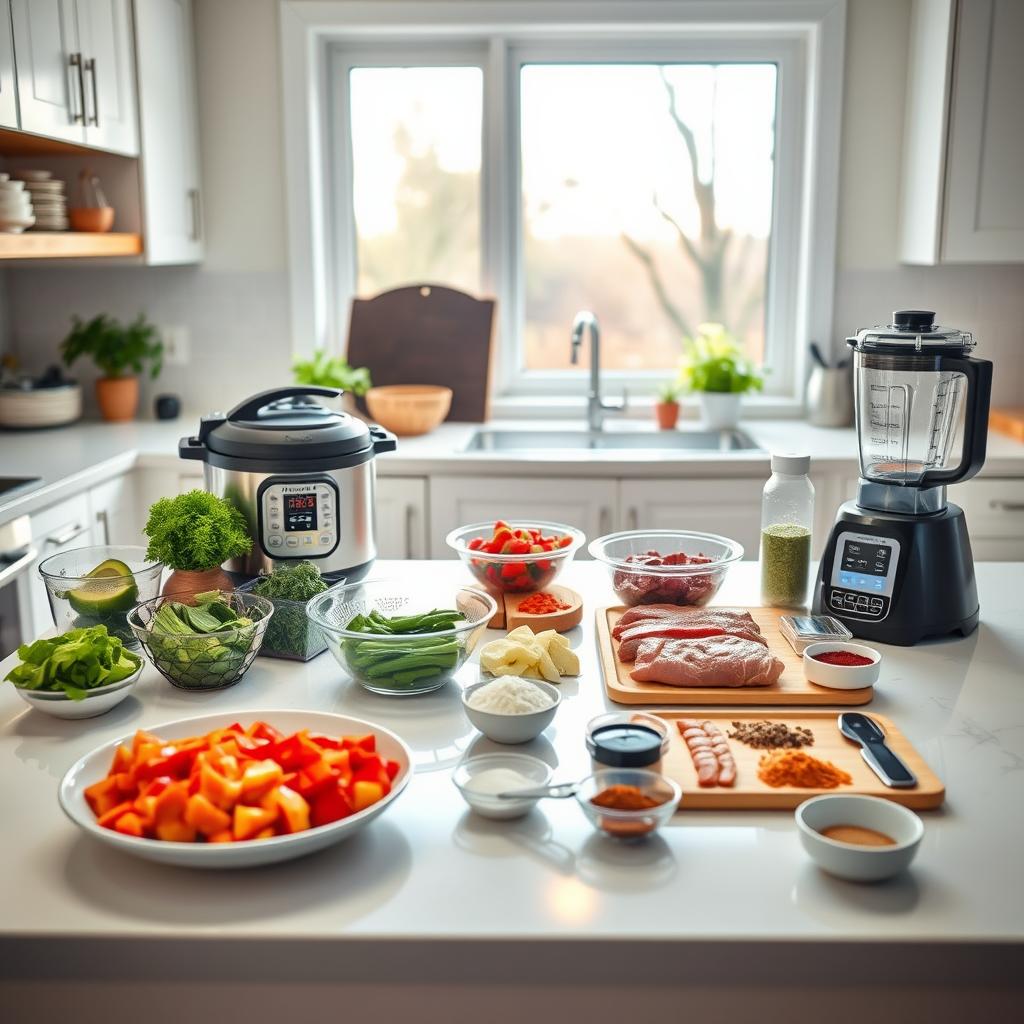
After the baby arrives, I cook meals in batches for the freezer. I fill it with chicken and vegetable soup, lentil soup, chili, and beef stew. I also freeze lasagna, meatballs, dhal, curries, and bolognese that have lots of veggies.
I freeze meals like quinoa or rice bowls with veggies and chicken for quick meals. Breakfasts are easy too, with baked oatmeal and breakfast burritos that last for months. These freezer meals are lifesavers on hard days.
Slow‑cooker, sheet‑pan, and one‑pot shortcuts
Slow cooker recipes are my go-to for dinners. I can prepare stews, soups, or sauces in the morning. Crockpot taco meat, teriyaki chicken, or vegetarian chili are easy wins.
For busy nights, sheet-pan cooking is great. I roast protein and veggies together. It’s simple: season, bake, and enjoy. One‑pot pastas and skillets also make cooking and cleanup easier, giving me more baby time.
Make‑ahead smoothie and oatmeal packs
I make smoothie packs with fruits and veggies ahead of time. With milk and protein powder, they’re a quick, nutritious blend. These packs help me meet my protein needs early in the day.
Oats are prepped in jars for grab-and-go breakfasts. I start with a simple oats base, then add toppings like fruit or nuts. This keeps me energized without much effort.
How I outsource: sharing a meal list with family and friends
I share a small menu with others so they know what meals I need. I include my favorite slow cooker recipes and ideas for quick meals. I also mention my need for postpartum freezer meals and hydration tips.
When extra help isn’t available, I use a baby carrier to keep cooking time short. Batch cooking and prepped smoothie packs ensure I eat well with little fuss.
Gentle Weight Loss Mindset: Eating Enough While Rebuilding Strength
My postpartum weight loss journey is about self-care, not rushing. I focus on eating regular, balanced meals that are quick to make and good for me. Since breastfeeding increases my calorie needs, I always drink plenty of water. This way, I don’t have to restrict my diet and feel stressed.
I aim to reshape my body after giving birth, instead of just losing weight. I eat about 120 grams of protein daily, choose fiber‑rich carbs, and don’t forget healthy fats. This diet helps me lose fat safely while breastfeeding, without affecting my milk supply or energy. I also avoid added sugars and prepare easy meals.
I begin my exercise with walks and exercises to strengthen my pelvic floor. Once my doctor says it’s okay, I add more challenging workouts like resistance training and Pilates. I use the PWR program and slowly add squats, deadlifts, and presses as I feel stronger.
Instead of focusing solely on weight, I use other ways to track my progress. A tape measure helps me see changes in my body size. I also use InBody scans at the gym to check my muscle and fat levels. This feedback helps me stay focused and not worry too much about the scale.
Eating simple meals helps me stay on track. Favorites like chili, teriyaki chicken, and taco meat are easy to reheat. Even when busy, I can eat nutritious foods like oats, smoothies, or Greek yogurt with nuts. This makes sticking to a balanced diet easier, even on hectic days.
I also take supplements to support my goals. These include whey protein without sugar, creatine, LMNT electrolytes, and magnesium at night. I always check with my healthcare provider first to make sure they’re safe while breastfeeding.
This gentle approach to losing weight after having a baby is kinder. I focus on eating well, doing approved exercises, walking a lot, and giving body changes time. The aim is to feel stronger, more energetic, and fit better in my clothes, not to starve myself.
Conclusion
In this season, I keep my postpartum meal plans simple. I focus on plates filled with protein, fiber-rich carbs, and healthy fats. This helps me stay full, heal, and support my milk supply.
My daily plan includes three meals and 2-3 snacks. I make sure to drink plenty of fluids and get important nutrients. Nutrients like choline, iron, and omega‑3s are my focus. They help me lose weight after baby without feeling tired.
I use quick, healthy recipes that take 15 minutes or less to prepare. Favorites include egg muffins and smoothies. They’re great because I can make a lot at once and have leftovers.
Cooking methods like sheet-pan and slow-cooker save time on cleaning. Wearing a baby carrier lets me cook and eat without putting my baby down.
For meals that help with breastfeeding, I aim for about 120 grams of protein a day. I combine it with high-fiber carbs and healthy fats. That keeps my energy and hormones balanced.
I drink around 2.6 liters of water a day and set reminders so I don’t skip meals. Sometimes, I get help with grocery shopping or recipes from my family. It makes meal prep a team effort.
Instead of just weighing myself, I also see how my clothes fit and measure my strength. I start with gentle exercises and gradually add more. With the right snacks and a positive attitude, I can enjoy good food. And I gently work towards losing weight after having a baby, one healthy meal at a time.