


Losing baby weight isn’t just about willpower. It has more to do with biology and our new daily lives. Many new moms still wear maternity clothes for months after birth. This isn’t a sign of failure, but a normal part of losing weight after having a baby. It involves hormones, healing, and adjusting to a completely new routine.
The idea of quickly getting back to how we looked before is popular online. But, it doesn’t tell the whole story. Despite breastfeeding and setting weight loss goals, dropping pounds can be slow. Many women take around nine months or even longer to feel close to their pre-baby shape. A healthy weight loss rate is 1–2 pounds per week, not rushing with crash diets.
Here’s what I’ve discovered: hormones, sleep, and how we feed our baby are all connected. Stress can increase cortisol levels, and a lack of sleep can mess with how hungry we feel. Also, nursing might make us hungrier. While these factors can slow progress, they don’t prevent it. Yes, sleep and losing weight after baby are connected. Yet, small achievements are still progress.

So, I’m following a science-supported way to safely lose the baby weight. I pay attention to eating foods that are good for me, watching how much I eat, and drinking plenty of water (about two liters daily). I gently increase my exercise with walks, using the stroller, and slowly getting back into core and pelvic floor exercises. I make sure to get help so I can sleep better. Good sleep helps with recovery and keeps me motivated.
This series reveals what actually works: calm and sustainable habits that support healing, help maintain milk production if breastfeeding, and keep me feeling balanced. No tricks. Just simple, effective steps that I can stick with every day.
Postpartum Reality Check: My Friendly, Science-Backed Starting Point
I started with a postpartum reality check. My body just did something huge, and it needs time, fuel, and care now. The idea of snapping back quickly is common on Instagram, but it’s not what most people go through.
I’m letting myself take it easy and I’m following a realistic timeline. This timeline respects the healing process, sleep needs, and the stress of daily life.
Why “snapping back” is the exception, not the rule
It’s rare for someone to shrink overnight, although it might seem common. The whole snap back idea doesn’t consider genetics, recovery after giving birth, lack of sleep, or the demands of feeding. And while some think breastfeeding burns fat, it often just makes you hungrier and retain water.
I care more about how much energy I have, how my clothes fit, and if I’m getting stronger. I’m not focusing on looking perfect in photos.
How long healthy postpartum weight loss can realistically take
A postpartum timeline could take up to a year or more, which is fine. After six weeks, it makes sense to lose weight slowly rather than quickly. Safe weight loss after having a baby is about losing 1–2 pounds each week. This can be done by eating a little less and moving more, once it’s safe to do so.
I’m eating foods full of nutrients, making sure I get at least 1,600 calories. If I’m breastfeeding, I’ll need 300–400 extra calories. This way, I can lose weight without losing my milk. I’m not aiming for perfection, but looking for patterns and learning from them.
Why I’m focusing on gentle, sustainable changes (not crash diets)
Crash diets can make you lose energy and muscle and slow down your metabolism. They might even affect your milk and how you’re feeling. A better approach is to lift weights, go for walks, and get enough sleep, then slowly change what I eat.
My plan is straightforward: eat protein with every meal, lots of fruits and veggies, drink plenty of water, and walk every day. After I get the okay from my doctor, I’ll start to add more exercise. This way, I can lose weight slowly and still feel good.
Why Baby Weight Is So Hard to Lose
My expectations for a steady weight loss didn’t pan out the way I thought. The changes in my postpartum metabolism and daily routines took me by surprise. Now, I’m learning to adjust and be kind to myself without quitting.
The interplay of hormones, sleep loss, and breastfeeding
Dealing with postpartum hormones, not getting enough sleep, feeling hungrier, and breastfeeding can be tough. When I don’t sleep well, my body wants more food, even if I just ate. Because of breastfeeding, I might use more calories but still keep extra fat.
Even though prolactin helps with breastfeeding, it also makes me want to eat more. This, along with other changes, slows down losing fat while I look after my baby.
How stress and life changes shift my habits and metabolism
Taking care of a baby changes my eating habits, leading me to choose quick, energy-rich snacks. I’m also moving less and sitting more, which affects how many calories I burn. High stress increases my appetite, making it easier to snack than prep meals.
Lack of sleep really adds up, making me too tired to prepare healthy foods. This cycle keeps me hungrier and slows any progress in weight loss.
Why timelines differ and comparison steals motivation
Everyone’s experience with recovery is unique, depending on many factors like the type of delivery and available support. How we handle sleep loss, appetite changes, and breastfeeding differs for each of us.
Trying to match others’ weight loss seen on social media isn’t helpful. My focus should be on understanding my own body, allowing for healing at my own pace.
Hormones After Birth: Cortisol, Ghrelin, Leptin, and Prolactin Explained
After giving birth, my body handles a mix of hormones from breastfeeding and stress. This can make me feel hungrier and my energy levels more up and down. Knowing about these hunger hormones helps me understand my body’s needs without feeling bad.
Stress and cortisol: why feeling overwhelmed can drive hunger
On tough days, my body’s cortisol levels go up with each problem and task. This stress response makes me hungrier. Feeling both energetic and exhausted, I often choose quick energy foods. That’s a typical way to react to stress.
To manage, I take a moment to breathe and eat a snack with protein and fiber. This helps me feel more balanced throughout the day.
Ghrelin and leptin: sleep loss and appetite cues gone haywire
Lack of sleep messes with my hormones: my ghrelin increases and leptin decreases. This makes me feel hungrier and less full, even if I eat the same amount. I end up wanting more food but not feeling satisfied.
By starting my day with foods like Greek yogurt and oats, I don’t feel as hungry. This makes my mornings easier and I snack less.
Prolactin’s role in milk supply—and why my body may hold extra fat
When breastfeeding, prolactin helps make milk and may cause my body to store energy. This can lead to extra fat storage, slow weight loss, and increased hunger. If I stop nursing, these effects usually lessen in a few weeks.
Understanding this, I eat regular meals and drink plenty of water. This approach helps me deal with breastfeeding hormones. It also explains weight plateaus despite being active and eating right.
Sleep Deprivation and Weight Loss: What I Can Control
I can’t fix every early wake-up, but I decide how to react. Postpartum sleep affects weight, so I notice patterns and ease the idea of perfect. These small changes keep me balanced through the nights and mornings.

How fragmented sleep nudges me toward calorie-dense foods
Broken sleep brings on a quick hunger. Ghrelin goes up, leptin goes down, and suddenly I want snacks—nuts, sweets, and sugary drinks. When I’m tired, I eat more, which doesn’t help with losing weight from night feedings. It also makes me lose track of my true hunger.
Getting just a bit more sleep helps control cravings. This extra rest stops me from snacking all the time. It makes choosing healthier meals easier.
Small sleep upgrades that make a big difference
I try to go to bed 20–30 minutes earlier if possible. I dim lights, avoid my phone, and don’t worry about chores too much. These small actions support my sleep and weight goals after having a baby.
My partner and I take turns with feeding, or I pump early for a good sleep start. I also fit in short naps to boost energy. With a little more rest, I find it easier to eat well, choose water, and go for walks. These are sleep tips that can really help new moms.
Support systems that help me protect rest
I seek help for nighttime or early-morning wake-ups to sleep more. Help from family, sleep experts, or a night nurse for a short time can improve sleep. This support is essential after giving birth.
When I rest better, I feel happier and more active. This helps with losing weight from night feedings in a healthy way. The aim is steady, manageable progress that fights off sleep-deprived hunger and keeps me going.
Breastfeeding, Appetite, and Calorie Needs
Nursing makes me feel hungrier and changes what my body craves. My calorie needs change every day, just like my breastfeeding hunger. To stay energized, I focus on balanced meals without overthinking the calorie count.
How many extra calories I likely need when nursing
I usually add 300–400 extra calories a day for breastfeeding. On days when my baby feeds more, I need around 400–500 calories. I listen to my hunger and watch how much milk my baby drinks. Then, I adjust my meals to include protein, grains, fruits, veggies, and healthy fats.
Why dieting too hard can impact milk supply
Too much dieting can harm my milk production. When I eat too little, my milk supply drops. So, I make sure to eat enough carbs and drink plenty of fluids. I also snack if my baby feeds more often. This balanced approach doesn’t mess with my supply or make me too hungry.
Normalizing slower loss (and even plateaus) while breastfeeding
I remember that holding onto some weight is my body’s way of protecting milk production. It’s okay if my body keeps a few extra pounds. When weight loss slows down, I focus on eating nutrient-rich foods frequently. As my baby needs less milk, I slightly cut back on food to meet my new needs without worry.
Nutrition That Fuels Recovery (And Still Supports Loss)
I focus on simple and steady eating after giving birth. This helps me heal and feed my baby while still losing weight. I choose lean proteins, fruits, veggies, whole grains, and healthy fats. I then see how my body and energy levels react before changing anything.
Postpartum timing: when to stop “diet talk” and start gentle cuts
I wait six weeks before cutting calories. Then, I reduce my intake by no more than 500 calories a day, but never go below 1,600. If I’m breastfeeding, I add 300–400 calories. I focus on quality protein, fiber, and iron to maintain my milk supply.
As my routine changes, so does my diet. When night feedings become less frequent, I adjust my food portions and pay attention to hunger signals. Making changes slowly helps me maintain my energy and avoid overeating.
Portion control without deprivation
Controlling portions doesn’t mean eating less. Half of my plate is fruits or veggies, with a palm-sized portion of protein and a fist of grains or beans. I use less oil and creamy dressings, checking portions now and then to avoid mistakes.
To avoid snacking too much, I plan 3-4 meals and sit down to eat them. If I crave something, I choose healthy options like Greek yogurt, berries, nuts, or air-popped popcorn. These swaps help me stick to my nutrition plan.
Nutrient-dense meals, smart snacks, and hydration goals
I keep healthy foods like eggs, tuna, chicken, veggies, and grains at hand. This makes it easy to eat well and still cut calories gently. My kitchen setup supports my goal without feeling restrictive.
Drinking enough water is crucial for weight loss. I aim for 2-4 liters a day to keep my urine light yellow. Having water nearby stops me from eating when I’m actually thirsty, helping with portion control.
Movement That Works: From Incidental Activity to Strength Training
I plan my day with quick, easy movements. These help me stay energetic and reduce stress after having a baby. I remind myself to get up, stretch, or move every 45 minutes when sitting. This keeps my back in good shape and helps me burn calories.
Walking, stroller strides, and everyday “incidental” movement
I often walk, especially with the stroller. It turns simple errands into a workout. I also add more brisk walks when the path is flat. I find ways to move more at home, like dancing or walking rather than driving for close destinations. These small activities really add up.
I start with easy distances and then gradually push myself more. At home, I move around while on the phone and stand to do laundry. This keeps me active without feeling too tired.
Why lean muscle raises metabolism (without getting bulky)
Strength training after having a baby helps me strengthen my core and back. It increases my metabolism, so I burn calories even when resting. I use resistance bands, kettlebells, or just my body weight. I focus on doing each exercise slowly and correctly.
Doing strength exercises doesn’t mean I’ll get bulky. I aim for two to three short workouts a week. This includes exercises like squats and rows. As I get stronger, I slowly increase difficulty.
Mixing cardio, strength, and core to avoid plateaus
I mix up walking, intervals, and strength training to keep improving. If I repeat the same walk daily, it might stop being effective. So, I change how fast I go, the route, or how long I walk. Adding stairs or hills makes it more challenging.
Being consistent is key. Then, I gradually add in more challenging exercises. Mixing in different types of exercises keeps me moving forward. It helps me improve without overdoing it.
Safe Postnatal Exercise Timeline (With Pelvic Floor in Mind)
I map my postnatal exercise in phases to rebuild safely. I watch for warning signs, keep breath smooth, and progress at a good pace. This approach allows core rehabilitation postpartum to blend with daily life without rushing.
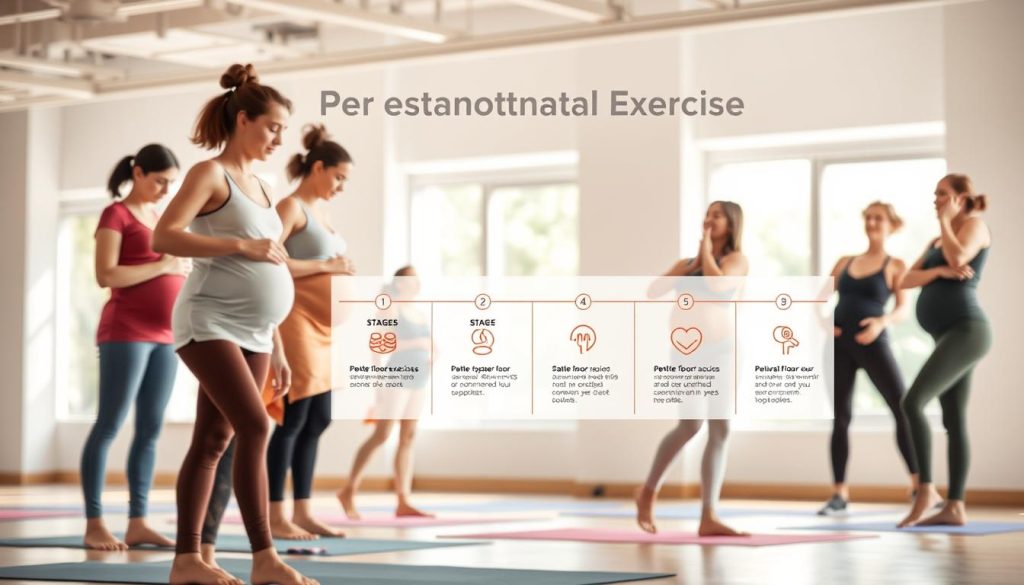
Weeks 6–8: doctor clearance and gentle, low-impact starts
After getting the 6-week clearance, I begin with short walks, diaphragmatic breathing, and activating my pelvic floor on exhales. Then, I carefully add heel slides, bridges, and side-lying clams with a focus on slow, controlled movements. Those who had a C-section should limit movement range and stop at any sign of discomfort.
Around 3 months: easing into resistance safely
By three months, I start using light dumbbells and bands. My goal is to keep reps crisp and free of pain. I link lifting with exhaling to increase stability and safeguard any stitches or scars. Core rehabilitation postpartum heads every set: I maintain tall posture, gently brace, and follow clean movement patterns.
Around 6 months: when HIIT may be appropriate—if foundations are solid
Near six months, I check for leaks, heaviness, or doming before trying anything. If all’s good, I test short interval sessions before fully engaging in postpartum HIIT. Any signs of distress, I go back to low impact and build strength until my foundation is reliable.
Pelvic floor and core activation cues I use every workout
I visualize a sling from tail to pubic bone. On exhaling, I lift inward and then forward, like stopping wind and urine flow, but without tightening my glutes or jaw. That gentle lift and a slight wrap of the lower belly are key cues. I use them in every rep to aid core rehabilitation postpartum and ensure steady progress.
Noticing pelvic pressure or leaks prompts me to lower impact and load. I go back to focusing on pelvic floor activation led by breath and only pick up the pace when symptoms improve. This way, my progress remains steady beyond the 6-week clearance and gears me up for any postpartum HIIT later.
Second (or Third) Baby Realities: What Changed for Me
Recovering from my first baby was one thing. My body reacted differently after more pregnancies. My abs and skin stretched out more, making jeans tight for longer. I relied on good habits—eating regularly, staying hydrated, and taking walks. And I gave myself extra time to heal.
Why recovery can feel slower after multiple pregnancies
The recovery journey was longer after my second child. The core muscles need more care after you’ve had more kids. I had to ease up on exercise when I saw bulging in my belly. I took deep breaths and let weight loss happen slowly.
Juggling kids, more incidental movement, and less sleep
Running after a toddler kept me on the move, which sometimes helped me lose weight. But I was getting less sleep, and finding time for formal exercise was hard. I celebrated small successes—walking with the stroller, playing on the floor, and carrying groceries. I kept snacks simple and water handy.
Core strength, pelvic stability, and delaying impact work
In the beginning, my pelvis and lower back were sore. I worked on keeping my pelvis stable with easy core exercises and strengthening my glutes. I waited to run or jump until I could tense my core without pain. This focus helps build a stronger core for any future pregnancies.
Mindset, Motivation, and Practical Tips I Lean On
I keep things simple and kind in my postpartum journey. I focus on small steps that fit my real-life needs, not perfect images. If I stray, I go back to basic activities that keep my day stable and make me feel strong.
Setting realistic goals and ditching celebrity “bounce back” myths
After giving birth, I set achievable goals, like slowly losing weight over months. I ignore stories of celebrities quickly getting back in shape. They often have help and coaches. I keep track of what I can manage—drinking water, walking, and eating protein. This way, my progress doesn’t stop, even if I don’t lose weight for a bit.
Cutting back on grazing and high-calorie snack traps
When I’m tired, avoiding snack traps is tough, so I plan. I choose fruits, veggies with hummus, Greek yogurt, turkey, or oats with chia. I watch the amount of oils, measure my nuts, and always have fiber-rich foods handy. Using a plate helps me not eat without thinking.
I try to have three to four balanced meals to keep hunger at bay. If I’m really hungry between meals, I eat something like cottage cheese with berries. This keeps my energy up and stops cravings.
Planning simple meals, staying hydrated, and moving often
I aim for meal plans that are easy, quick, and nourishing. I like to have eggs with toast, salmon and rice, beans with tortillas, and chicken with veggies. I prepare once, then use different combinations throughout the week.
Drinking enough water is key for me, so I always have a bottle close by. I aim for two liters a day and check if my pee is pale yellow. I fit in movement whenever I can: quick walks, using the stroller, doing chores, or just standing up more. If I stop seeing results, I add variety to my exercises, include my family for support, and make sure I go to bed on time.
Conclusion
Baby weight can be stubborn for many reasons. Stress can increase cortisol, while bad sleep affects our hunger hormones. Also, breastfeeding may cause our bodies to keep extra fat. This explains why losing weight while breastfeeding feels slow. Safe weight loss means dropping 1–2 pounds a week. For some, the weight sticks until they stop breastfeeding.
My plan after giving birth is simple yet effective. I focus on eating foods rich in nutrients, drinking plenty of water, and avoiding quick fixes. While breastfeeding, I make sure to eat a bit more, then cut back slightly later. I trust these methods because they keep me energized and healthy without risking my milk production.
I stay active in realistic ways. Starting with daily walks and stroller outings, I slowly add more challenging exercises. I only tackle high-intensity workouts when I feel fully prepared. This balance of exercise and good eating keeps me going without feeling overwhelmed.
Being patient and taking small steps every day are key. With help from my healthcare providers and family, I grow stronger and maintain my health while achieving my objectives. This method allows me to recover, enjoy time with my baby, and see lasting results.