


I remember sitting on my kitchen floor at 3:00 AM, four days after bringing my daughter home. My body felt like it had been through a literal war, my hormones were plummeting, and I was so hungry I could have eaten the drywall. I reached for a cold, dry granola bar and immediately burst into tears. It wasn’t just the exhaustion; my body was screaming for something *warm*, something *real*, and something that actually helped me heal from the inside out.
The first six weeks—often called the fourth trimester—is a time of massive physiological change. You aren’t just “losing baby weight.” You’re healing a plate-sized wound in your uterus, replenishing blood lost during delivery, and likely producing liquid gold for a tiny human. What you put on your plate during this window matters more than any “snap back” diet ever will. We’re talking about functional nutrition designed to stabilize your mood and repair tissue.
Why This Matters
Postpartum isn’t a time for restriction. Your body is in a high-inflammatory state right after birth. If you don’t nourish it properly, you risk longer healing times, increased hair loss, and that deep-in-the-bones fatigue that no amount of caffeine can fix.
Healing foods work to restore iron stores, balance the “hormonal cliff” that happens when the placenta leaves the body, and provide the collagen needed for pelvic floor and abdominal repair. Think of your kitchen as your first line of recovery. Warm, easy-to-digest foods are the gold standard here because your digestive system is often sluggish after birth. We want to make the nutrients as bioavailable as possible.
The First 48 Hours: Hydration and Clear Energy
The immediate aftermath of birth is about replenishing fluids. Whether you had a vaginal birth or a C-section, your body is dehydrated.
- Bone Broth — This is the ultimate postpartum superfood. It’s packed with collagen, glycine, and proline to help repair tissues. Sip it like tea.
- Electrolyte-Rich Water — Skip the sugary sports drinks. Mix water with a pinch of sea salt, a squeeze of lemon, and a splash of maple syrup.
- Warm Applesauce — Cooked fruit is much easier on a sensitive postpartum gut than a raw apple. Add cinnamon to help stabilize blood sugar.
- Coconut Water — Natural potassium helps with the postpartum swelling (edema) as your body flushes out extra pregnancy fluids.
Weeks 1-2: Tissue Repair and Blood Building
This is the peak healing phase. You need protein and iron to rebuild.
- Slow-Cooked Beef or Lamb — Red meat provides heme iron, which is the most absorbable form for someone who has lost blood. Cook it until it falls apart.
- Red Lentil Dal — Lentils are a powerhouse of fiber and folate. The soft texture won’t strain your digestion.
- Soft Scrambled Eggs — Eggs are the best source of choline, which is vital if you are breastfeeding and need to support baby’s brain development.
- Steamed Spinach and Kale — Always cook your greens right now. Raw kale is too tough for a healing gut to handle, but steamed greens provide essential Vitamin K.
- Congee or Rice Porridge — A traditional healing food in many cultures, rice porridge is incredibly soothing and hydrating.
Weeks 3-4: Hormone Support and Milk Supply
By now, the “baby blues” might be hitting, and if you’re nursing, your supply is regulating.
- Oats — Steel-cut or rolled oats contain saponins, which may help with milk-producing hormones.
- Salmon and Sardines — You need Omega-3 fatty acids (DHA) to fight off postpartum depression and support your own brain health.
- Avocados — Healthy fats are the building blocks of hormones. Eat them by the spoonful with a little lime and salt.
- Walnuts and Flaxseeds — These provide the healthy fats needed to make your breast milk satisfying for the baby.
- Blueberries — These are high in antioxidants to help lower the systemic inflammation still lingering in your body.
Weeks 5-6: Sustained Energy and Fiber
You’re likely moving more now, but the sleep deprivation is real. You need slow-burn energy.
- Sweet Potatoes — High in Vitamin A and complex carbs, these give you energy that won’t lead to a sugar crash.
- Quinoa — A complete protein that is lighter than beans but still very filling.
- Fermented Foods — Start reintroducing sauerkraut, kimchi, or kefir. Your gut microbiome took a hit (especially if you had antibiotics during labor), and these help rebuild it.
- Chia Seed Pudding — High in fiber to keep things moving. Postpartum constipation is no joke, and chia seeds are a gentle way to stay regular.
- Chicken and Vegetable Stew — A classic for a reason. Make sure it includes carrots and celery for the mineral content.
Pro Tips from a Real Mom
- Warmth is King — In many traditional cultures (like TCM or Ayurveda), cold foods are avoided postpartum. Stick to warm or room-temperature meals. It sounds woo-woo, but your digestion will thank you.
- The “One-Hand Rule” — Prep snacks you can eat with one hand while holding or feeding a baby. Think energy balls, sliced cheese, or muffins.
- Salt Your Food — Unless your doctor says otherwise, don’t fear salt. Your body needs the sodium to maintain blood volume and electrolyte balance right now.
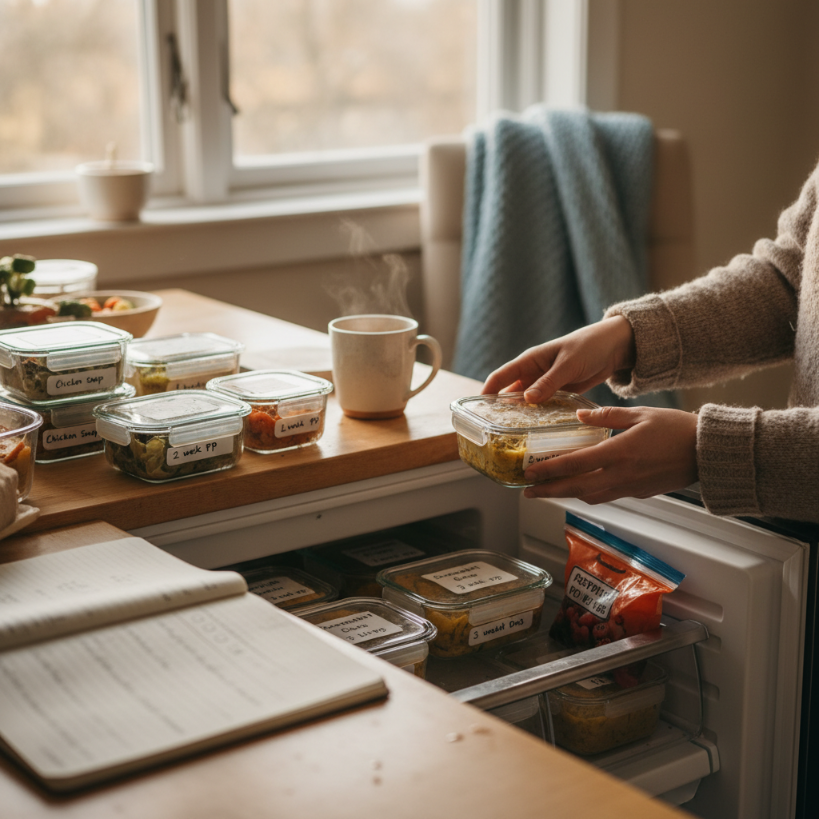
- Batch Cook and Freeze — If you’re still in your third trimester, double your recipes now. You will not want to chop an onion at week two.
- Hydrate Before You Medicate — Before reaching for ibuprofen for those after-pains, drink a big glass of water. It won’t stop the pain, but dehydration makes every cramp feel worse.
What I’d Skip
I’d honestly skip the raw salads and ice-cold smoothies for the first month. I know, we’re told salads are “healthy,” but they require a lot of energy to break down. Your body’s energy is better spent on healing your perineum or your incision. Save the giant kale salads for week 8. Also, try to limit excessive caffeine. I know you’re tired, but too much coffee can deplete your magnesium stores and make you (and the baby) jittery.
FAQ
What if I don’t have time to cook?
Focus on assembly rather than cooking. A rotisserie chicken, a bag of frozen steamed veggies, and a 90-second rice packet is a perfectly healing meal. Don’t let “perfect” be the enemy of “fed.”
Is it okay to eat spicy food?
If you enjoy it, yes! Some people worry it affects breast milk, but most babies handle it fine. However, if you’re dealing with postpartum heartburn or hemorrhoids, you might want to keep the heat mild.
How many extra calories do I need?
If you are breastfeeding, you generally need about 300–500 extra calories a day. But don’t count them. Listen to your hunger cues; they are usually very loud in the first six weeks.
What is the best way to increase iron?
Pair your iron sources (like steak or lentils) with a Vitamin C source (like a squeeze of lemon or bell peppers). This helps your body absorb the iron much more efficiently.
- This is what worked for me — always check anything health-related with your OB, midwife, or dietitian.*
Final Thoughts
The first six weeks are a marathon, not a sprint. Feed yourself with the same tenderness you use to feed your new baby. You’re doing a massive job, and you deserve a warm, nourishing meal. Go easy on yourself—you’re literally rebuilding a human and a mother at the same time.