


I rely on a smoothie most mornings after having a baby because it’s fast, filling, and lets me prioritize protein without cooking. I blend whole fruit and leafy greens to keep fiber high and hunger low.
I use dairy or soy milk as a smart liquid base—dairy gives about 8 grams of complete protein per cup, and soy is a solid plant alternative. I add healthy fats like nut butter, seeds, or a little peanut powder for texture and longer satiety.
I’ll share simple builds and quick recipes that fit a busy mom’s schedule. You’ll see how I track calories and grams of protein so each cup supports recovery and weight goals.
Expect vanilla and chocolate profiles, ideas for ice and thickness, and pantry staples that rotate with workout needs. Blend at home to cut added sugars and control salt and texture. This guide is about progress, not perfection—pick the recipes that match your taste and time.
Why I Lean on High-Protein Smoothies After Birth
The newborn phase taught me that a simple, protein-forward beverage can steady my energy between feedings. When I missed a sit-down meal, a quick blend kept hunger at bay and helped me feel more even through the day.
I choose milk or soy milk as my base because each cup adds roughly 8 grams of complete protein. That little boost makes it easy to hit target grams without a big calorie spike.
I build drinks with whole fruit and leafy greens for fiber, plus a small amount of nuts or seeds for healthy fat and creaminess. Those ingredients slow digestion and help manage weight by cutting cravings.
I track protein grams rather than obsess over numbers. Focusing on quality—real food ingredients and balanced macros—beats grazing on empty snacks. Most mornings, five minutes with a blender gives me a nourishing, one-handed meal that fits new-mom life.
What Makes a Postpartum-Friendly Protein Smoothie
When I build a postpartum-friendly drink, I aim for steady hunger control and simple ingredients I can grab quickly. I center each recipe on whole produce and a reliable protein base so the result feels like a real mini-meal, not a snack.
Protein targets and fullness: what actually keeps me satisfied
I aim for a clear goal: about 20–25 grams of protein per cup to keep me full for hours. A single cup of dairy milk adds 8 grams of complete protein, and soy milk gives a similar boost when I want a plant option.
I track grams and calories so the drink supports recovery and energy. Hitting that protein baseline cuts down on mid-morning snacking for me.
Whole fruit, leafy greens, and healthy fats for fiber and nutrients
I always use whole fruit instead of juice to preserve fiber and steady blood sugar. I slip in spinach for vitamins and extra fiber; it blends in without changing the taste.
Healthy fat choices—avocado, nut butter, or a spoon of seed butter—add texture and heart-healthy fat. I often toss in ground flax or chia for omega-3s, extra fiber, and thickness.
My Five-Minute Build Formula for Busy Mornings
Mornings are chaotic, so I built a quick formula that consistently delivers protein, fiber, and flavor in under five minutes. I focus on whole fruit and greens, simple swaps for fat, and a clear order for loading the jar.
Base and liquid
I start with 1 to 1½ cup liquid—usually dairy milk (about 8 g complete protein per cup) or soy—to lock in a strong protein base from the first pour.
Protein powder picks
Next I add a scoop of protein powder: whey protein for creaminess, pea for plant options, or egg white for a neutral profile. Frozen fruit comes after so the powder mixes evenly.
Add-ins that matter
I drop in a handful of spinach, then chia or ground flax for fiber, and a spoon of peanut butter for richness. I load in this order—liquids, powders, greens, soft fruit, then frozen fruit and ice last—so blades catch fast and texture gets creamy.
I watch grams of protein and tweak builds for weight goals by swapping nut butter for more greens or extra yogurt. I taste, adjust, blend 30–60 seconds, and rinse the jar right away.
High-Protein Smoothies
I learned to simplify mornings by rotating a handful of nutrient-dense drink styles I actually make.
My core lineup includes strawberry banana classics, chocolate recovery blends, vanilla pumpkin, berry-and-greens, and tropical spins. Each recipe centers on whole fruit, leafy greens, and a protein-rich base like milk or soy (about 8 grams per cup).
I note typical grams of protein up front so I know if a cup is a meal or a light pick-me-up. Fiber comes from whole fruit and greens, and healthy fats from nut butter or seeds keep carbs steady.
Quick cues: use one cup liquid, a scoop of protein when needed, and yogurt as an easy protein boost if you skip powder. For strawberries or banana fans, pick the kid-friendly options and swap fresh for frozen when it’s cheaper.
Keep flavor fun with cinnamon, cocoa, or vanilla. Batch two favorites on Sunday so mornings are always “which delicious one” instead of “what should I make?”
Strawberry Banana Power Smoothie I Make on Repeat
This strawberry banana cup is my dependable morning option when I need quick fuel and real nutrients. It blends bright fruit, a solid protein base, and a little ground flax for fiber that holds me through a busy start.
Ingredients I grab from the freezer and pantry
I use 1 cup milk (or a higher-protein plant milk), frozen strawberries, one ripe banana, 2 tablespoons ground flax, and a scoop of whey or pea protein. Optional: a spoon of yogurt for extra creaminess.
That combo typically lands near 39 grams of protein and about 9 grams of fiber, totaling roughly 415 calories. I count grams and calories so the cup works as a real mini-meal.
Blend smooth: texture tips, ice, and sweetness adjustments
I load liquid first, then powder and ground flax, then fruit, and finish with ice so the blades don’t stall. Use more ice for a thicker sip or a splash of milk mid-blend for a looser pour.
Sweetness comes from a very ripe banana or extra strawberries before adding sugar. I keep portions pre-measured in a freezer bag so this smoothie is five minutes away any morning.
Chocolate Peanut Butter Recovery Smoothie
When I want a chocolate fix that still fuels recovery, I reach for a simple peanut-and-cocoa blend. It tastes like a treat but gives the protein and fiber I need after a workout or a rough morning.
Whey protein, cocoa powder, and natural peanut butter combo
I blend 1 cup milk or soy milk, 1 frozen banana, 1 scoop whey protein, 1 tablespoon natural peanut butter, and 1 tablespoon cocoa powder. That base delivers a dessert-level chocolate flavor while keeping fat modest with real peanut butter.
I slip in a small handful of spinach; it hides under the chocolate and boosts micronutrients. A few ice cubes make the cup thick and cold without extra sweetener.
I track grams of protein so this actually supports recovery. If I need fewer calories, I scale the peanut down. For more staying power, I add a drizzle more peanut or an extra scoop of protein powder.
I avoid syrups and rely on ripe banana and cocoa for sweetness. Whey blends ultra-smooth, while pea or other powder works as a plant option if I skip dairy.
Vanilla Pumpkin Pie Protein Smoothie
Autumn flavors make mornings feel cozy, so I often reach for a pumpkin-and-vanilla cup that tastes like pie but fuels my day. I combine 1 cup milk, ¾ cup pumpkin puree, 1 scoop vanilla protein, a dash of vanilla extract, and a tablespoon of flax for a pie-in-a-glass experience.
The pumpkin adds natural fiber and creaminess while keeping carbs steady and satisfying. Sometimes I toss in a few oats or chopped walnuts for extra body and a nutty bite.
I keep the powder simple—vanilla matches the spice profile and balances sweetness without extra sugar. I track grams of protein so the drink carries me through late-morning chores without hunger pangs.
Calories are easy to scale: add yogurt for more staying power or stick to milk for a lighter pour. Portioning pumpkin in the freezer makes these ingredients come together in seconds.
Very Berry Super Shake for Breakfast
I reach for a berry-and-spinach blend when I need a breakfast that powers a long morning. This cup blends whole fruit, leafy greens, yogurt, and healthy fats so the drink feels like a real meal and keeps hunger away.
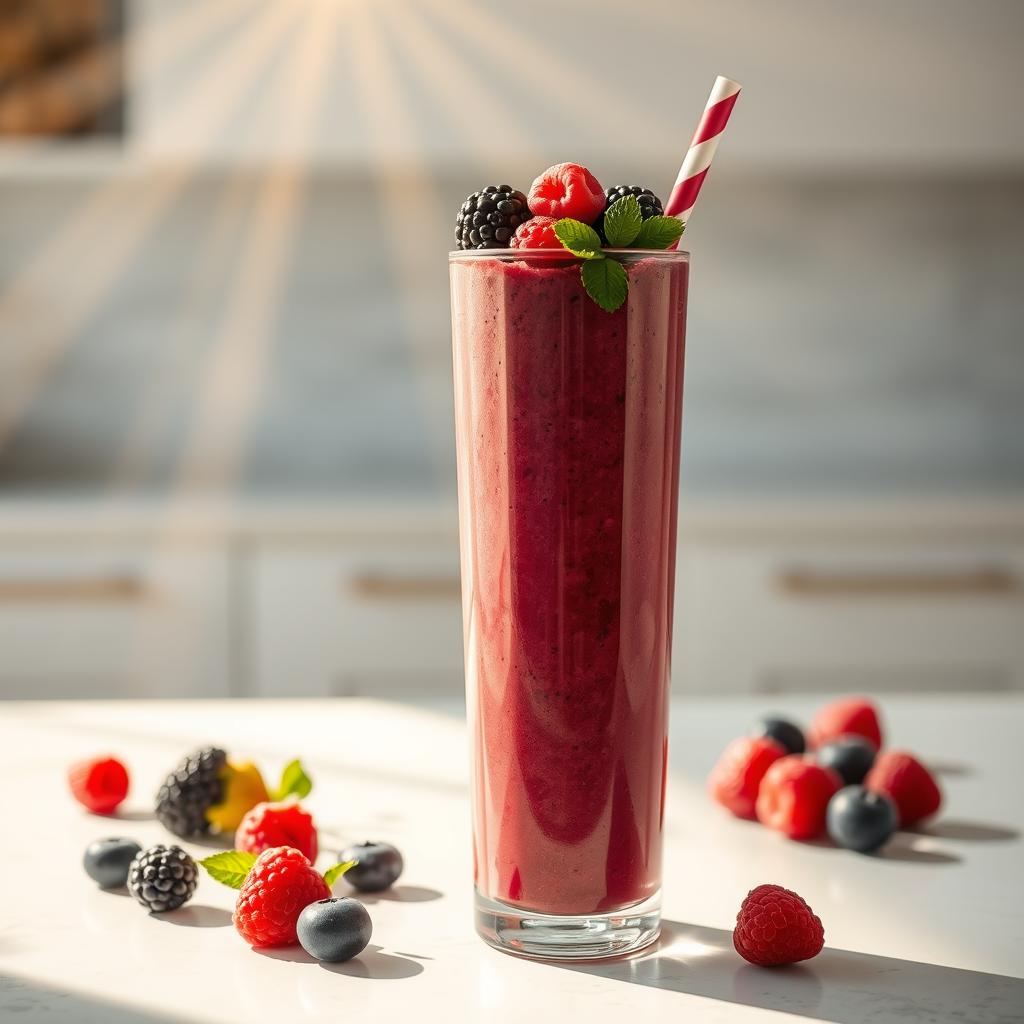
Spinach, mixed berries, yogurt, and walnuts for fiber and fats
I load 1 cup milk, a cup of spinach, and 2 cups mixed berries (fresh frozen) with ½ cup yogurt and a spoon of walnuts. I add ground seeds and a scoop of protein so the cup can hit over 50 grams protein and about 14 grams fiber when I build it with enough powder and whole berries.
The berries naturally sweeten the cup, so I skip syrups or juice and keep carbs steady. I toss in chia for thickness and to stretch fullness into late morning.
If I’m out of walnuts, I swap in almond butter. For more calories I add an extra spoon of nuts and a few oats. When I want it lighter, I cut the yogurt and add more spinach.
I pour the finished shake into a tall glass and sip it with coffee. Checking grams and calories helps me use these ingredients to fuel recovery without overeating.
Tropical Pineapple-Spinach Protein Smoothie
Pineapple and spinach make a surprising pair that keeps mornings light and steady for me.
I blend 1 cup milk, 1 cup fresh frozen pineapple, a handful of spinach, and a scoop of vanilla protein powder for a bright, green-tinged base. I add a tablespoon of ground flax for fiber and a few ice cubes for a frosty finish.
Sometimes I stir in yogurt for tang and extra protein, or I keep it dairy-light when I want a thinner sip. I start with a half cup liquid and add up to a full cup to control thickness as the blender works.
I watch grams of protein so the fruit-forward flavor still functions as a meal. To save calories, I halve the pineapple and bulk it out with more spinach; for dessert vibes, I dust in shredded coconut before pouring.
Blend on high until no stringy bits remain, then pour immediately—this mix can separate if it sits. These simple ingredients give a sunshiny cup that balances carbs, protein, and fiber in one go.
Blueberry Cottage Cheese Casein Smoothie
I reach for a cottage-cheese blend when I want a creamy, slow-release protein breakfast that keeps hunger in check.
Cottage cheese supplies casein, a slow-digesting protein that steadies me through nursing and busy mornings. A typical mix with berries, milk, and a spoon of ground flax hits about 34 grams protein and roughly 7 grams of fiber per serving in my sample formulas.
My go-to: ¾ cup cottage cheese, 1 cup blueberries, 1 cup milk, and a spoon of ground flax. I adjust the cup measure of liquid to get a spoonable or drinkable texture.
I skip adding whey here since the cottage cheese already gives a complete matrix of amino acids. For lower fat, I choose low-fat cottage cheese and let the blueberries carry flavor.
A pinch of cinnamon or a little lemon zest brightens the berries without extra calories. I blend just until smooth so the berries don’t over-thin the cup, and I check grams of protein and fiber to make it a true meal.
Green Matcha Mango Protein Smoothie
I love a green matcha mango cup when I need a bright, protein-rich pick-me-up. This version balances matcha, tropical fruit, and a creamy nut touch so it feels fresh and filling.
Matcha, vanilla protein, cashew butter, and coconut milk beverage
I pour 1 cup coconut milk beverage, add a scoop of vanilla protein powder, 1 tsp matcha, and 1 cup frozen mango for a bright, green pick-me-up.
I stir in 1 tablespoon cashew butter for silkiness and a squeeze of lime with a pinch of ginger to lift the flavor. The mix can deliver around 35 grams protein with moderate carbs and balanced fats.
If I want more grams of protein, I add half a scoop extra and blend briefly in the blender. I sometimes toss in half a banana for creaminess or add a few ice cubes if the mango isn’t frozen.
This option is my green-tea energy boost without coffee. The vanilla and matcha balance each other so the sip never tastes too grassy. It’s an easy tropical choice when I want a protein-forward smoothie that keeps me moving.
Cherry Chocolate Antioxidant Smoothie
Post-exercise cravings meet real nutrition in my cherry-chocolate recovery drink. A cherry-based blend soothes muscles while the chocolate flavor feels like a small reward.
I blend 1 cup milk with 1 to 2 cups cherries, a scoop of chocolate protein, and a spoon of ground flax. I add a teaspoon of cocoa powder to deepen the chocolate and let the cherries bring natural sweetness and antioxidants.
I tuck a handful of spinach into the jar; it hides under the chocolate-cherry mix and lifts fiber without changing the taste. I watch grams of protein and fiber so this cup stays a recovery meal, not just dessert.
I tweak the cup measures for a shake-like pour that still sips easily. For texture and crunch I scatter a few cacao nibs on top and drink it right away. A tiny pinch of salt sharpens the chocolate without extra sweetness.
Sometimes I split the batch into two smaller glasses for an immediate post-workout pour and an afternoon pick-me-up. It’s my favorite way to combine indulgence with benefits.
How I Keep Calories, Protein, Carbs, and Fiber in Balance
I balance my morning blends by thinking of them as mini meals that must hit protein, fiber, and a sensible calories target.
Typical macros per cup and how I tweak for weight goals
Most of my cups fall between about 233 and 585 calories depending on ingredients. Typical ranges I see in my kitchen are 25–60 g protein, 36–59 g carbs, and 8–14 g fiber per serving.
I raise protein with dairy or soy milk (about 8 grams per cup), yogurt, or an extra half scoop of powder when I need more staying power. Tracking grams helps me adjust without overthinking each pour.
To lower carbs I cut bananas or swap them for berries and cauliflower rice for bulk and fiber. I steer carbs toward whole fruit so the cup keeps real-food content and slow-release energy.
I use fiber as my appetite stabilizer—spinach, flax, and chia all stretch the drink and slow digestion. A small amount of fat adds mouthfeel and keeps me full; I add nuts or oats on higher-activity days and go leaner when I want fewer calories and to manage weight.
For family-size batches, I make a base and let people add protein or nuts to hit their own targets. Balance matters more than perfection—if it tastes good, I’ll keep making it and that steady progress beats a perfect single cup every time.
Sweet but Smart: My Go-To Ways to Flavor Without Excess Sugar
I build sweetness into my cup with whole fruit, a touch of vanilla extract, and spice so I avoid added syrups. Whole fruit gives natural sweetness and fiber, so I skip juices that concentrate sugar and lose texture.
I taste before I sweeten and watch grams of added sugar. Ripe bananas or berries usually do the job. If I need more depth, a small drizzle of honey or maple adds sweetness without overdoing it.
I use cocoa powder for deep chocolate flavor and almond or peanut butter for creamy sweetness that fills you up. Spices like cinnamon, ginger, and pumpkin pie spice add warmth. A pinch of salt makes nut and chocolate notes pop.
I prefer unflavored or vanilla powder and layer flavor with whole-food add-ins like citrus zest, cherries, or nut butter. My rule: fix texture and flavor first, then add any sweetener sparingly so the cup stays satisfying and smart.
Dairy, Plant-Based, and Lactation-Safe Swaps I Use
When I swap bases, I look first at protein and then at taste to keep mornings simple and satisfying.
Greek yogurt, kefir, and soy milk for a protein bump
I rotate Greek yogurt, kefir, and soy milk when I want a big protein boost with minimal flavor change. Dairy milk gives about 8 grams of protein per cup, and soy is a plant-based match.
Greek yogurt and kefir add protein and probiotics, so I sometimes stir them in after blending for a tangy finish. I use whey when I’m okay with dairy; otherwise I pick pea or egg white powders as an alternative.
Almond, oat, and coconut milk: when and how I use them
Almond, oat, and coconut milk are texture and flavor options rather than protein heroes unless fortified. I choose them when I want a lighter sip or a specific vanilla note.
I watch calories and grams of protein so my cup still supports weight goals. I add greens or seeds for extra fiber and pick unsweetened versions to avoid sneaky sugar. This way each base stays an option that fits my routine and targets.
Fresh, Frozen, or a Mix: My Fruit and Veggie Strategy
I favor a blend of fresh and frozen produce so each cup balances chill, texture, and flavor.
I default to frozen fruit for that frosty body and to skip adding too much ice. Using whole fruit preserves fiber, so I keep fresh pieces on hand for brightness.
I keep strawberries and banana in the freezer because they’re versatile and kid-approved. I also slice extra banana before freezing so I can grab two pieces when I want a creamier pour.
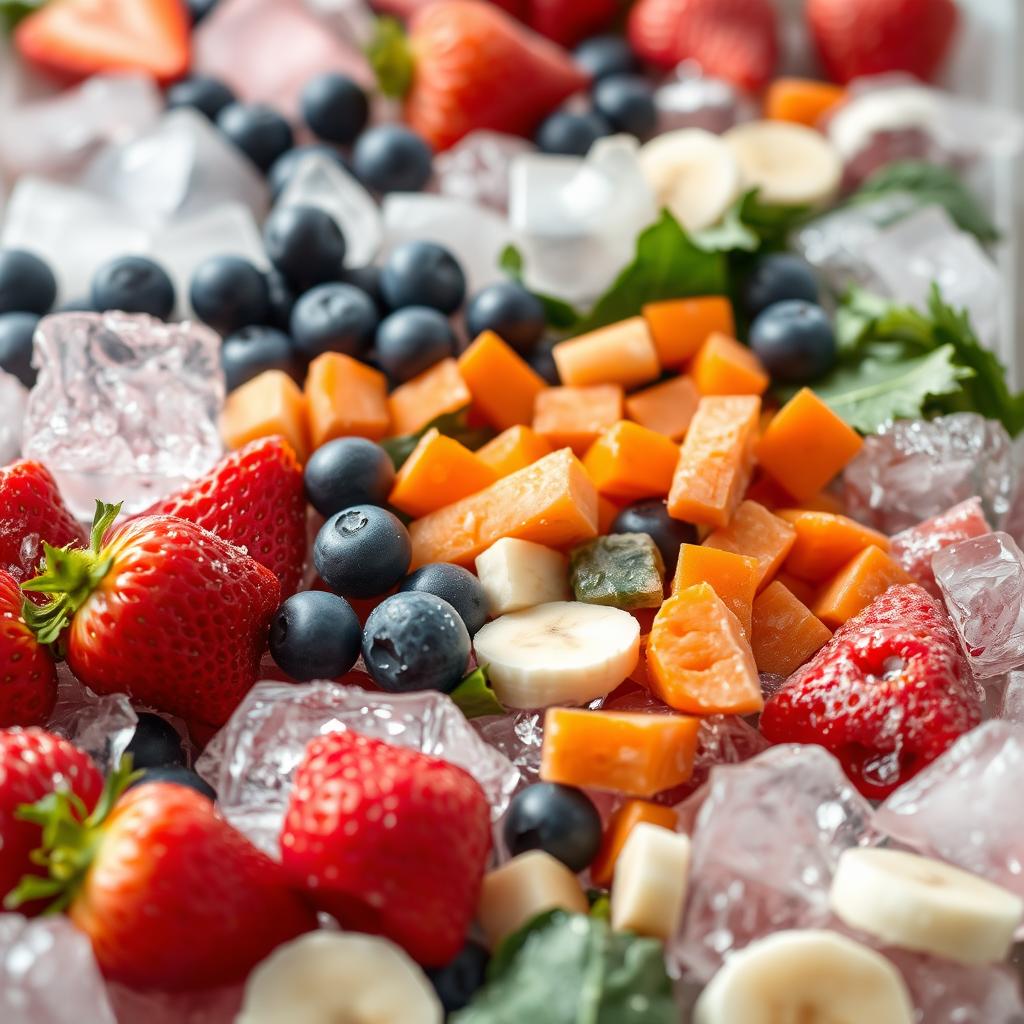
I portion by cup into labeled freezer bags so mornings are dump-and-blend. Spinach and kale are mild greens that blend smoothly; I use fresh tubs or freeze small handfuls for convenience.
I pick milk or soy when I want more protein without changing the fruit profile. My rule: one to two fruits per smoothie and fill the rest with greens for balance.
Rotate seasonal produce, but keep the freezer stocked. Mixing fresh and frozen ingredients keeps each drink feeling new and easy to make all week.
Pantry and Freezer Prep for Grab-and-Blend Mornings
A little prep in the pantry and freezer turns frantic mornings into five-minute wins.
I pre-pack measured fruit and greens into freezer bags so my fresh frozen portions are ready to go. I write the cup of liquid needed on each bag to remove guessing when I’m rushed.
I keep protein powder in a clear container with a scoop inside for instant measuring. I also stash a spare scoop by the blender when mornings get chaotic.
Protein powder scoops, seed jars, and quick-access jars
I line up jars of ground flax, chia, and cocoa on the counter for quick pinches that boost nutrition. I portion nuts and seeds ahead of time so my macros stay consistent.
I pre-portion small packs of almond and peanut butter so I don’t over-scoop. Rotating ingredients weekly keeps the lineup exciting and balanced.
Finally, I keep backup shelf-stable milks and a sticky note with favorite combos on the blender. This simple prep keeps my protein targets steady, no matter how busy the morning is.
Blender Tips: The Order I Load and How I Get a Creamy Texture
A reliable loading order and a few simple speed tricks make every morning blend silky and fast.
.
I always pour liquids first, then add powder and any scoop of protein so dry bits don’t cling. Next comes leafy greens, soft fruit, and frozen fruit with ice last to help the blades finish cleanly.
Start the blender low to catch ingredients, then ramp to high for 30–60 seconds so the jar turns completely smooth. If powder or seeds stick, pause and scrape down the sides, then blend smooth again.
Use just enough ice for chill—too much will mute flavor as it melts. Pulse in short bursts when adding stems or tough greens so they fully break down without overworking the motor.
If the cup stalls, add a small splash of liquid instead of more time. A tiny scoop of yogurt or half a banana fixes any gritty texture fast. I avoid overfilling; two smaller blends often mix smoother than one giant batch.
Rinse the blender right away with warm water and a drop of soap. Consistent order and timing help me blend smooth results every single morning.
Conclusion
One simple cup can serve as a reliable breakfast or an easy snack that keeps hunger away and supports recovery. I keep a few go-to recipes—like strawberry banana and chocolate blends—on rotation so decisions are fast on busy days.
I build each drink around whole fruit, leafy greens, and a protein base such as milk or soy. Measuring grams and watching calories helps the cup stay meal-like and not just a quick pick-me-up.
Prep freezer bags and pantry stations, tweak texture with ice or a spoon of nut butter, and bookmark favorite options. Personalize the framework, listen to your body, and celebrate consistency over perfection. Now blend, sip, and keep going.